


























What Is an Extension Tube? A Comprehensive Guide to Its Applications, Types, and Features
Introduction
In many medical procedures, simply having a catheter, intravenous (IV) cannula, or syringe is not sufficient to ensure the safe administration of fluids and medications. In numerous clinical situations, a flexible, secure, and reliable connection between the patient and medical devices is required to facilitate medication administration, fluid infusion, or blood sampling without placing excessive mechanical stress on the catheter insertion site.
One of the most commonly used medical devices specifically designed for this purpose is the Extension Tube. Although it may appear to be a simple accessory, it plays a significant role in improving patient safety, reducing the risk of catheter dislodgement, facilitating clinical procedures, and enhancing the efficiency of healthcare professionals.
Today, extension tubes are widely used in operating rooms, intensive care units (ICU), coronary care units (CCU), emergency departments, dialysis centers, angiography suites, chemotherapy units, inpatient wards, and even home healthcare settings.
Advances in medical device technology have also led to the development of various types of extension tubes with different lengths, internal diameters, flow-control clamps, secure connectors, and high-pressure resistance to meet the diverse requirements of modern healthcare facilities.
In this article, we will explore what an extension tube is, its structure, working mechanism, different types, clinical applications, essential features of a high-quality product, and important considerations when selecting an extension tube.
What Is an Extension Tube?
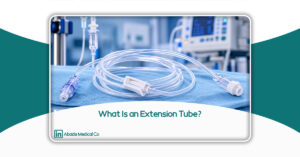
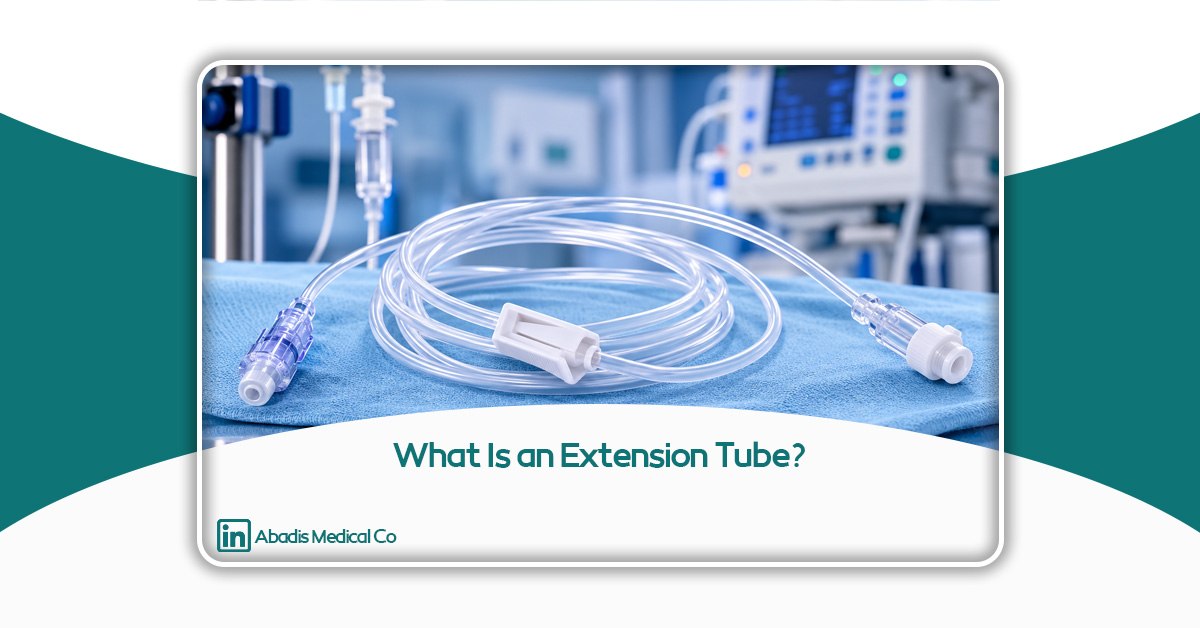
An Extension Tube is a sterile, flexible medical tube designed to serve as an interface between infusion devices and vascular access devices or other medical catheters. By providing an additional fluid pathway, it enables medication administration, fluid infusion, blood sampling, and the connection of various medical devices without applying direct stress to the catheter insertion site.
Extension tubes are typically manufactured from transparent, biocompatible medical-grade polymers and are equipped with standard Luer or Luer Lock connectors at both ends, allowing compatibility with syringes, IV administration sets, peripheral IV cannulas, central venous catheters (CVCs), arterial catheters, and numerous other medical devices.
Depending on their intended application, some extension tubes may also include:
- Check valves
- Three-way stopcocks
- Needle-free connectors
- Flow-control clamps
These additional components improve both safety and ease of use in clinical practice.
Despite its simple design, the extension tube plays an important role in minimizing trauma to catheter insertion sites, improving patient comfort, and facilitating routine medical procedures.
How Does an Extension Tube Work?
An extension tube functions by creating a secure and flexible pathway between the patient and infusion equipment.
Under normal circumstances, a syringe or IV administration set connects directly to an IV cannula or catheter. Every connection or disconnection places mechanical stress on the catheter insertion site, increasing the risk of pain, catheter movement, or accidental dislodgement.
An extension tube effectively solves this problem.
By adding several centimeters of flexible tubing, infusion devices are positioned at a safer distance from the patient’s body, allowing medications and fluids to be administered through the extension rather than directly at the catheter hub.
As a result, patient movement or manipulation of infusion equipment exerts significantly less force on the vascular access site, thereby reducing the likelihood of catheter-related complications.
For this reason, many healthcare facilities consider extension tubes an essential component of standard vascular access management, particularly for patients requiring repeated injections or prolonged intravenous therapy.
Main Components of an Extension Tube
Although an extension tube appears to be a simple device, each of its components plays a vital role in ensuring safe and reliable performance.
1. Flexible Tubing
The primary component is a transparent, flexible tube responsible for transporting medications and fluids.
It is commonly manufactured from medical-grade PVC or other biocompatible polymers and should possess the following characteristics:
- Excellent flexibility
- Resistance to kinking
- High transparency for visual monitoring of fluid flow
- Resistance to injection pressure
- Chemical compatibility with medications and infusion solutions
2. Luer Lock Connector
Most standard extension tubes are equipped with Luer Lock connectors at both ends.
The advantages of this connection system include:
- More secure attachment
- Reduced risk of accidental disconnection
- Prevention of fluid leakage
- Compatibility with most medical devices
For these reasons, the Luer Lock system has become the preferred connection standard for infusion equipment worldwide.
3. Flow-Control Clamp
Many extension tubes include an integrated plastic clamp that allows clinicians to temporarily stop or resume fluid flow.
The clamp provides several important benefits:
- Prevents fluid leakage during syringe or IV set replacement
- Reduces the risk of air entering the infusion system
- Improves control over medication administration
4. Additional Components (Available in Certain Models)
Depending on the clinical application, extension tubes may also incorporate:
- Three-way stopcocks
- Check valves
- Needle-free connectors
- Injection ports
These accessories enable simultaneous medication administration, blood sampling, or connection of multiple devices without disconnecting the primary infusion line.
Why Is an Extension Tube Important?
Although it may seem like a simple accessory, an extension tube provides significant advantages for patients, healthcare professionals, and medical equipment.
Reduces Mechanical Stress on the Catheter Site
One of the primary benefits of an extension tube is minimizing traction and mechanical stress on the IV cannula or catheter insertion site.
This substantially lowers the risk of catheter displacement or accidental removal while improving patient comfort.
Improves Patient Safety
By increasing the distance between the catheter insertion site and infusion equipment, extension tubes reduce the risk of vascular injury, infiltration, and other complications associated with movement of syringes or IV tubing.
Facilitates Clinical Procedures
Extension tubes make it easier for healthcare professionals to perform various procedures, including:
- Medication administration
- Catheter flushing
- Blood sampling
- Syringe replacement
These tasks can be completed without repeatedly manipulating the catheter insertion site.
Supports Infection Prevention
Many modern extension tubes are designed with secure connectors and closed-system components that reduce direct access to the vascular pathway.
This design helps minimize contamination risks and supports infection prevention protocols.
Enhances Patient Comfort
Patients undergoing prolonged treatment benefit from greater freedom of movement, while routine medical procedures can be performed with less discomfort.
Clinical Applications of Extension Tubes
Extension tubes are among the most widely used disposable medical devices and are utilized in nearly every hospital department and healthcare setting. Their flexibility, ease of connection, and ability to improve the safety of infusion therapy have made them an integral component of numerous clinical procedures.
Depending on the patient’s condition and treatment requirements, extension tubes can serve a variety of purposes.
1. Intravenous (IV) Therapy
The most common application of an extension tube is in the administration of intravenous fluids, medications, and infusion solutions.
In these situations, the extension tube creates an appropriate distance between the patient and the infusion equipment, allowing syringes and IV administration sets to be connected or disconnected without applying direct mechanical stress to the IV cannula.
This not only enhances patient comfort but also minimizes the risk of catheter displacement.
2. Repeated Medication Administration
Patients who require frequent intravenous injections throughout the day often benefit from the use of an extension tube.
The device allows repeated medication administration without repeatedly manipulating the catheter insertion site, thereby reducing the risks of vein irritation, pain, and vascular injury.
3. Intensive Care Units (ICU and CCU)
Critically ill patients are typically connected to multiple vascular access devices, infusion pumps, and monitoring equipment.
In these environments, extension tubes help by:
- Providing easier access to infusion lines
- Improving the healthcare provider’s working space
- Reducing the likelihood of accidental catheter traction
- Organizing multiple infusion lines more efficiently
4. Operating Rooms
During surgical procedures, patients are usually under general anesthesia, and anesthesiologists must maintain continuous access for rapid medication and fluid administration.
Extension tubes allow anesthesiologists to administer medications safely without interfering with the sterile surgical field.
They also reduce mechanical stress on vascular access devices when patients are repositioned during surgery.
5. Diagnostic Imaging and Angiography
In angiography suites, CT scanners, MRI departments, and other imaging modalities, contrast media often need to be injected from a safe distance.
For these applications, High-Pressure Extension Tubes are specifically designed to withstand the high injection pressures generated by automatic power injectors.
6. Dialysis
Certain dialysis procedures utilize extension tubes to establish secure connections between dialysis catheters and dialysis equipment.
In these applications, connector integrity and tubing durability are particularly important.
7. Chemotherapy
Cancer patients receiving chemotherapy frequently undergo prolonged intravenous infusions.
Extension tubes help by:
- Reducing repeated manipulation of vascular access devices
- Improving the safety of medication administration
- Allowing greater patient mobility
- Minimizing trauma to vascular access sites
Types of Extension Tubes
Extension tubes are available in various designs based on length, pressure resistance, connector type, and intended clinical application.
Selection should always be based on the patient’s clinical requirements, physician preference, and the manufacturer’s specifications.
Based on Length
Extension tubes are manufactured in a variety of lengths.
Common sizes include:
- 10 cm
- 20 cm
- 30 cm
- 50 cm
- 75 cm
- 100 cm or longer
The appropriate length depends on the clinical procedure, patient positioning, and required working distance.
Based on Pressure Rating
Standard Extension Tubes
These are intended for routine intravenous infusions, medication administration, and general clinical applications throughout hospitals.
High-Pressure Extension Tubes
High-pressure models are specifically engineered to withstand significantly higher pressures generated by power injectors.
Typical applications include:
- Contrast media injection
- CT angiography
- MRI contrast studies
- Angiography
- Automatic injector systems
Manufacturers generally specify the maximum allowable pressure (Pressure Rating) for these products.
Based on Connector Type
Extension tubes may be equipped with different connection systems, including:
- Luer Slip
- Luer Lock
- Needle-free Connectors
- Three-way Stopcocks
- Y-Connectors
Among these options, Luer Lock connectors are the most widely used due to their superior connection security and reduced risk of accidental disconnection.
Based on Additional Features
Certain extension tubes incorporate supplementary components such as:
- Flow-control clamps
- Check valves
- Injection ports
- Filters
- Three-way stopcocks
These additional features make the device suitable for more specialized clinical applications.
Standard vs. High-Pressure Extension Tubes
One of the most common questions regarding extension tubes concerns the difference between standard and high-pressure models.
Although they appear similar, they differ significantly in design, material composition, and mechanical strength.
Standard extension tubes are intended for routine administration of IV fluids, medications, and infusion solutions under normal operating pressures.
High-pressure extension tubes, however, are specifically designed to withstand the substantially higher pressures produced by automatic contrast injectors.
For this reason, using a standard extension tube for high-pressure contrast injection is not recommended, as it may result in leakage, tubing rupture, or failure of the infusion system.
High-pressure extension tubes are manufactured using reinforced materials and undergo pressure testing before release to ensure safe performance in demanding clinical environments.
Applications of Extension Tubes in Medical Practice
Extension tubes are among the most widely used disposable medical devices and are utilized across nearly every hospital department and healthcare setting. Their flexibility, ease of connection, and ability to improve the safety of infusion therapy have made them an essential component of many clinical procedures.
Depending on the patient’s condition and the type of treatment, extension tubes serve a variety of clinical purposes.
1. Intravenous (IV) Therapy
The most common application of an extension tube is in the administration of intravenous fluids, medications, and infusion solutions.
By creating an appropriate distance between the patient and the infusion equipment, the extension tube allows syringes or IV administration sets to be connected and disconnected without placing direct mechanical stress on the intravenous catheter.
This not only enhances patient comfort but also reduces the risk of catheter dislodgement.
2. Repeated Medication Administration
Patients who require frequent intravenous injections throughout the day often benefit from the use of an extension tube.
It enables repeated medication administration without repeatedly manipulating the catheter insertion site, thereby reducing the likelihood of vein irritation, discomfort, and vascular injury.
3. Intensive Care Units (ICU and CCU)
Critically ill patients are often connected to multiple vascular access devices, infusion pumps, and monitoring systems simultaneously.
In these settings, extension tubes provide several important advantages:
- Easier access to vascular lines
- Increased working space for healthcare professionals
- Reduced risk of accidental catheter traction
- Improved organization and management of multiple infusion lines
4. Operating Rooms
During surgical procedures, patients are typically under anesthesia, and the anesthesia team must maintain immediate access for medication and fluid administration.
Extension tubes allow anesthesiologists to administer medications safely without interfering with the sterile surgical field.
They also reduce stress on the vascular access site when the patient’s position is changed during surgery.
5. Diagnostic Imaging and Angiography
In angiography suites, CT scanners, MRI units, and other imaging departments, contrast media often need to be injected from a safe distance.
For these applications, High-Pressure Extension Tubes are specifically designed to withstand the elevated pressures generated by automatic power injectors.
6. Dialysis
In certain dialysis procedures, extension tubes are used to establish secure connections between vascular access catheters and dialysis equipment.
In these situations, tubing integrity, pressure resistance, and connector reliability are especially important.
7. Chemotherapy
Cancer patients undergoing chemotherapy frequently require prolonged or repeated intravenous infusions.
Extension tubes provide several benefits in these cases:
- Reduced manipulation of the vascular access device
- Safer administration of cytotoxic medications
- Greater patient mobility and comfort
- Lower risk of vascular trauma
Types of Extension Tubes
Extension tubes are available in various configurations based on their length, pressure tolerance, connector type, and intended clinical application.
The appropriate model should always be selected according to clinical requirements, physician preference, and the manufacturer’s technical specifications.
By Length
Extension tubes are manufactured in a wide range of lengths, including:
- 10 cm
- 20 cm
- 30 cm
- 50 cm
- 75 cm
- 100 cm and longer
The appropriate length depends on the patient’s position, treatment type, and required working distance.
By Pressure Rating
Standard Extension Tube
Designed for routine IV infusions, medication administration, and general fluid delivery.
These are commonly used throughout hospitals and outpatient healthcare facilities.
High-Pressure Extension Tube
Specifically engineered to withstand significantly higher injection pressures and is commonly used for:
- Contrast media injection
- CT angiography
- MRI contrast administration
- Conventional angiography
- Automatic power injectors
Manufacturers typically specify the maximum pressure rating of these products to ensure safe use in high-pressure applications.
By Connector Type
Extension tubes may be equipped with different connector configurations, including:
- Luer Slip
- Luer Lock
- Needle-free Connectors
- Three-way Stopcocks
- Y-Connectors
Among these, Luer Lock connectors are the preferred choice in modern healthcare because they provide a more secure and leak-resistant connection.
By Additional Features
Certain extension tubes include integrated accessories such as:
- Flow control clamps
- Check valves
- Injection ports
- Inline filters
- Three-way stopcocks
These additional components allow the device to support more specialized clinical procedures while improving efficiency and safety.
Difference Between Standard and High-Pressure Extension Tubes
One of the most common questions regarding extension tubes concerns the difference between standard models and High-Pressure Extension Tubes.
Although they appear very similar externally, they differ significantly in terms of design, material composition, and mechanical performance.
Standard extension tubes are intended for conventional infusion therapy and routine medication administration under normal operating pressures.
In contrast, high-pressure extension tubes are specifically engineered to withstand the substantially greater pressures generated by automatic contrast injectors.
For this reason, standard extension tubes should never be used for power injection of contrast media, as doing so may result in leakage, tubing rupture, connector failure, or damage to the infusion system.
High-pressure extension tubes are manufactured using reinforced medical-grade materials and undergo pressure testing before release to ensure safe performance in demanding clinical applications.
Features of a High-Quality Extension Tube
Although an extension tube is classified as a disposable medical device, its manufacturing quality has a direct impact on patient safety, infusion performance, and the prevention of complications. Therefore, product selection should be based not only on cost but also on technical specifications and compliance with recognized medical device standards.
A high-quality extension tube should possess the following characteristics:
1. Medical-Grade Materials
One of the most important characteristics of a quality extension tube is the use of medical-grade, biocompatible polymers.
These materials should:
- Be free from toxic substances and natural rubber latex.
- Be chemically compatible with medications and infusion solutions.
- Provide excellent transparency for monitoring fluid flow.
- Resist cracking, deformation, and material degradation.
The use of premium medical-grade materials enhances both product durability and patient safety.
2. High Transparency
A transparent extension tube allows healthcare professionals to easily observe:
- Fluid flow
- Air bubbles
- Blood reflux
- Clot formation
- Line occlusions
This visual monitoring is essential for early detection of infusion-related problems and contributes to safer patient care.
3. Kink Resistance
Kinking or twisting of the tubing can obstruct fluid flow and compromise the accuracy of medication delivery.
For this reason, high-quality extension tubes are specifically designed to resist kinking, bending, and normal mechanical stress while maintaining consistent fluid flow.
4. Secure Connectors
The quality of the connectors is critical to the safe performance of an extension tube.
Reliable connectors should:
- Minimize the risk of accidental disconnection
- Prevent fluid leakage
- Provide secure compatibility with other medical devices
For these reasons, Luer Lock connectors have become the preferred standard in modern infusion systems.
5. Appropriate Pressure Resistance
For specialized procedures such as angiography and contrast media injection, extension tubes must safely tolerate elevated injection pressures.
Manufacturers typically specify the product’s maximum pressure rating on the packaging or device labeling to ensure proper selection.
6. Sterility
Extension tubes are generally supplied as sterile, single-use medical devices.
Sterility significantly reduces the risk of healthcare-associated infections and helps maintain patient safety.
Before use, healthcare professionals should always verify that:
- The packaging is intact.
- The sterile barrier has not been compromised.
- The expiration date is valid.
The Role of Extension Tubes in Infection Prevention
Infection prevention is one of the highest priorities in healthcare, and disposable medical devices play an important role in achieving this objective.
Although an extension tube does not independently prevent infections, its design can significantly reduce opportunities for contamination.
Its contribution to infection prevention includes:
Reduced Manipulation of the Catheter Hub
Each time a syringe or IV administration set is connected or disconnected, there is a potential risk of microbial contamination.
An extension tube reduces the frequency of direct manipulation at the catheter insertion site, thereby decreasing contamination risks.
Protection of the Vascular Access Pathway
Many modern extension tubes incorporate secure connectors and closed-system components that minimize microbial entry into the infusion pathway.
These design features support compliance with infection prevention protocols.
Reduced Exposure to Blood and Body Fluids
Certain clinical procedures require medication administration or blood sampling at a safer distance from the patient.
Extension tubes help reduce direct exposure of healthcare workers to blood and potentially infectious body fluids.
Support for Infection Control Protocols
When combined with proper hand hygiene, connector disinfection, aseptic technique, and the appropriate use of personal protective equipment (PPE), extension tubes contribute to comprehensive infection prevention strategies within healthcare facilities.
Common Mistakes When Using Extension Tubes
Even the highest-quality extension tube can become ineffective or unsafe if used improperly.
Common errors include:
- Using a standard extension tube for high-pressure contrast injection
- Repeatedly connecting and disconnecting devices without maintaining aseptic technique
- Failing to remove air bubbles from the tubing before use
- Allowing the tubing to become kinked or twisted
- Reusing products intended for single use
- Improper connector attachment
- Using products with damaged packaging
- Using expired devices
Proper staff training and strict adherence to the manufacturer’s Instructions for Use (IFU) can significantly reduce these risks.
Recent Innovations in Extension Tube Technology
As medical technology continues to evolve, manufacturers are constantly improving extension tube designs to enhance patient safety, simplify clinical workflows, and reduce the risk of healthcare-associated infections.
Some of the most significant innovations include:
Needle-Free Connectors
Needle-free connectors have become increasingly common in modern infusion systems.
Their advantages include:
- Reducing the risk of needlestick injuries among healthcare workers
- Minimizing contamination of the infusion pathway
- Improving compliance with infection prevention protocols
- Providing safer and more convenient vascular access
These connectors have become standard components in many hospitals worldwide.
Check Valves
Many advanced extension tubes are equipped with check valves that prevent the backflow of blood and intravenous fluids.
Their benefits include:
- Maintaining one-way fluid flow
- Reducing blood reflux
- Helping maintain catheter patency
- Lowering the risk of catheter occlusion
High-Pressure Extension Tubes
Modern imaging techniques frequently require rapid injection of contrast media using automatic power injectors.
To meet these demands, manufacturers have developed extension tubes specifically engineered to withstand high injection pressures while maintaining structural integrity and leak-free performance.
Anti-Kink Tubing
Advanced polymer technologies have enabled the production of tubing that remains flexible while resisting kinking and collapse.
These improvements help ensure:
- Consistent fluid flow
- Accurate medication delivery
- Reduced interruption during infusion therapy
Closed Infusion Systems
Closed IV systems are becoming increasingly popular because they minimize exposure of the vascular access pathway to the external environment.
These systems contribute to:
- Reduced microbial contamination
- Improved patient safety
- Better compliance with infection prevention guidelines
- Lower rates of catheter-related bloodstream infections
How to Choose the Right Extension Tube
Selecting the appropriate extension tube should always be based on the clinical application, patient requirements, and technical specifications of the medical device.
When purchasing an extension tube, healthcare providers should consider the following factors:
- Manufactured from high-quality medical-grade materials
- Excellent transparency for monitoring fluid flow
- Resistance to kinking and mechanical deformation
- Secure connectors, preferably Luer Lock
- Appropriate pressure rating for the intended application
- Sterile and intended for single use
- Compatibility with other infusion and vascular access devices
- Compliance with internationally recognized medical device standards
- Proper packaging with product traceability and clear labeling
Choosing a high-quality extension tube not only enhances patient safety but also reduces clinical errors, improves workflow efficiency, and contributes to better overall healthcare outcomes.
The Future of Extension Tubes in Healthcare
With continuous advancements in medical technology, extension tubes are evolving to provide greater safety, improved performance, and enhanced infection prevention.
One of the most significant trends is the widespread adoption of Closed IV Systems, which reduce the need for repeated opening and reconnection of infusion lines. By minimizing access to the vascular pathway, these systems help decrease the risk of microbial contamination. They are particularly valuable in intensive care units, chemotherapy departments, and the treatment of immunocompromised patients.
The use of Needle-Free Connectors is also expanding rapidly. In addition to reducing the risk of needlestick injuries among healthcare professionals, these connectors help maintain a closed infusion pathway and lower the likelihood of contamination.
Some of the latest extension tube designs also incorporate anti-reflux valves, which prevent the backflow of blood or infusion fluids, helping to maintain continuous flow and catheter patency.
Manufacturers are increasingly utilizing advanced polymers that offer greater transparency, improved pressure resistance, superior kink resistance, and enhanced durability under varying environmental conditions. These improvements contribute to longer product life, more reliable performance, and fewer infusion-related complications.
As minimally invasive procedures, home healthcare services, and smart infusion pump technologies continue to expand, extension tubes are expected to become even more specialized, incorporating advanced features tailored to the evolving needs of modern healthcare.
Conclusion
The Extension Tube is an essential component of modern infusion therapy, providing a safe and flexible connection between vascular access devices and infusion equipment.
By reducing mechanical stress on catheter insertion sites, facilitating medication administration, improving clinician access, and minimizing the risk of catheter displacement, extension tubes have become indispensable in a wide range of medical procedures.
Today, they are routinely used in operating rooms, emergency departments, intensive care units, chemotherapy centers, dialysis units, angiography suites, and general intravenous therapy.
Selecting a high-quality extension tube manufactured from medical-grade materials, equipped with secure connectors, appropriate pressure resistance, and compliant with internationally recognized medical device standards is critical for ensuring patient safety and optimal clinical performance.
Ultimately, proper device selection, adherence to infection prevention protocols, continuous staff education, and the use of high-quality products from reputable manufacturers all contribute to improved patient outcomes and higher standards of healthcare delivery.
References
- Infusion Nurses Society (INS). Infusion Therapy Standards of Practice.
- Centers for Disease Control and Prevention (CDC). Guidelines for the Prevention of Intravascular Catheter-Related Infections.
- World Health Organization (WHO). WHO Guidelines on the Use of Peripheral Intravenous Catheters.
- ISO 8536 Series. Infusion Equipment for Medical Use.
- ISO 80369 Series. Small-bore Connectors for Liquids and Gases in Healthcare Applications.
- Association for the Advancement of Medical Instrumentation (AAMI). Infusion Therapy and Vascular Access Guidelines.
- European Society of Clinical Microbiology and Infectious Diseases (ESCMID). Guidelines on Catheter-Related Infections.
- PubMed-indexed peer-reviewed articles on Extension Tubes, Intravenous Therapy, Vascular Access Devices, Needle-Free Connectors, Infusion Safety, and Catheter Management.