














Abstract
In today’s world, sustainable development has become one of the key requirements of the healthcare and medical device industries.
Abadis Medical, the first and largest manufacturer of disposable suction liner bags in Iran, has taken responsible and effective steps toward protecting the environment and improving public health.
Among its leading initiatives are the Green Zagros Project (in two phases of 400 and 600 oak saplings planted), the Green Factory Design aimed at reducing energy consumption, and the production of sustainable and safe medical products.
The use of Abadis suction liner bags has optimized infectious waste management in hospitals, saved 38 million liters of water by the end of 2024, and significantly enhanced safety in healthcare environments.
This report examines Abadis’ environmental actions and sustainable development programs through 2024. The findings demonstrate that simultaneous attention to the environmental, economic, and social pillars of sustainability can play a decisive role in improving the quality of healthcare services and preserving natural resources.
Introduction
Sustainable development has emerged as a central pillar of progress in the twenty-first century—especially within critical and sensitive sectors such as medical equipment manufacturing. Balancing environmental protection, resource efficiency, and the improvement of healthcare service quality forms the core of this approach.
As the first and largest producer of disposable suction liner bags in Iran, Abadis Medical Knowledge-Based Company has adopted a responsible and sustainability-oriented strategy since its establishment.
The company’s initiatives in environmental protection, infectious waste management, resource conservation, and the development of sustainable medical products provide tangible proof of this commitment.
Notable projects include the Green Zagros Tree Planting Program (phases of 400 and 600 saplings), energy- and water-optimized factory design, and the development of suction bags with minimal environmental footprint.
This report aims to review Abadis’ sustainability actions and strategic objectives through the end of 2024, analyzing the company’s transformative impact on Iran’s medical equipment industry from environmental, social, and economic perspectives.
Abadis’ Actions Toward Sustainable Development by the End of 2024
Action 1: Launch of Sustainable Medical Products at Abadis
In alignment with SDG 3 (Good Health and Well-being), SDG 6 (Clean Water and Sanitation), and SDG 12 (Responsible Consumption and Production),
Abadis Medical has focused its efforts on developing and producing sustainable medical products.
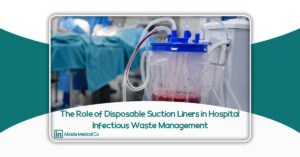
The introduction of disposable suction liner bags marked a turning point in the management of infectious hospital waste and the reduction of environmental impacts in healthcare facilities.
Reducing Resource Consumption
Before the development of this product, traditional suction systems required approximately 10 liters of water, 1 liter of disinfectant, and 18 minutes of labor per cleaning cycle.
By replacing conventional reusable suction canisters with Abadis’ disposable liner bags:
- Water and chemical consumption were completely eliminated,
- Human labor time was saved,
- Hospital operational costs were reduced, and
- Natural resources were effectively conserved.
This change—especially in high-consumption units such as operating rooms—has resulted in 38 million liters of water saved by the end of 2024, a figure that continues to grow.
This measurable and scalable achievement is recognized internally as the Dynamic Saving Model for healthcare sustainability.
Improving Hospital Waste Management and Safety
By completely eliminating the need to wash traditional suction containers, Abadis’ liner bags have significantly reduced the risk of healthcare staff exposure to infectious fluids.
Field studies show that the use of these bags has:
- Reduced the risk of infection transmission to staff by over 80%,
- Decreased the volume of contaminated wastewater, and
- Lowered treatment and disposal costs.
This innovation has made infectious waste management simpler, safer, and more sustainable — marking a significant advancement in hospital hygiene and occupational safety.
Enhancing Environmental Impact
The use of Abadis disposable suction liner bags has led to:
- A marked reduction in water, energy, and chemical use,
- Decreased emission of hazardous microorganisms,
- Lower microbial load within hospital environments,
- Reduced pressure on wastewater treatment systems, and
- Overall improvement of environmental safety indicators.
Through this initiative, Abadis has demonstrated that healthcare quality enhancement and environmental protection can move forward together in a synergistic path.
This project established the foundation of Iran’s emerging model of Sustainable Healthcare Industry and remains one of Abadis’ most significant achievements by the end of 2024.
Action 2: Elimination of Printed Catalogs at Iran Health 2022 Exhibition
Aligned with SDG 12 (Responsible Consumption and Production),
Abadis Medical Knowledge-Based Company launched its “Paperless Exhibition Project” at Iran Health 2022, completely eliminating the use of printed catalogs.
In this initiative, all product and technical information was presented digitally through QR Codes. Visitors could scan the code to access the digital version of the catalog and symbolically sign the “No Paper Wall” to express their support for this green movement.
Since that year, no printed catalogs have been produced or distributed by Abadis, marking a permanent transition to sustainable communication practices.
This initiative has led to a significant reduction in paper, ink, and energy consumption associated with printing, transportation, and recycling processes.
Based on internal estimates, by eliminating approximately 2,000 copies of 16-page catalogs each year (averaging 64 grams per copy), Abadis has prevented the use of 128 kilograms of paper annually.
This corresponds to:
- Saving about two mature trees per year, and
- Preventing the emission of around 230 kilograms of CO₂ from the printing and logistics chain.
Beyond its environmental benefits, the initiative also accelerated digital transformation within the company — enabling faster updates of product data, reducing marketing costs, and promoting eco-conscious behavior among peers and customers in Iran’s medical device industry.
Action 3: Tree Planting in the Zagros Region – “Save the Zagros” Project
Environmental preservation is a fundamental pillar of sustainable development.
Recognizing its social responsibility as the leading producer of disposable suction liner bags in Iran, Abadis Medical launched the “Save the Zagros” Reforestation Initiative — a long-term project to restore one of Iran’s most vital ecosystems.
Significance of the Zagros Region
The Zagros Mountains supply nearly 40% of Iran’s water resources and encompass over one-third of the country’s forests.
Decades of deforestation, overgrazing, wildfires, and prolonged droughts have severely damaged this ecosystem, leading to soil erosion, air pollution, and reduced water quality. Protecting Zagros is therefore a strategic priority for Iran’s ecological stability.
Why Oak Trees?
Following consultations with environmental experts, Abadis selected the Persian oak (Quercus brantii) — a native, drought-resistant species that plays a key role in stabilizing soil, conserving groundwater, and resisting desertification.
Its long lifespan and natural adaptation to Zagros’ climate make it the ideal species for regional reforestation.
Abadis’ Actions and Long-Term Vision
To date, 1,000 oak saplings have been planted by Abadis across two phases — 400 and 600 trees — with the goal of reaching 4,000 saplings by the end of 2026 (1405).
The project goes beyond tree planting and includes:
- Continuous irrigation and maintenance programs,
- Collaboration with local communities and environmental NGOs for education and protection efforts, and
- Periodic monitoring of growth and forest health.
Environmental and Public Health Impact
Each mature oak tree absorbs up to 21 kilograms of CO₂ annually. Upon completion, the project will absorb more than 84 tons of CO₂ per year, contributing to cleaner air, climate stability, and healthier ecosystems.
By linking forest preservation to public health outcomes, Abadis demonstrates how corporate sustainability can directly reduce respiratory and infectious disease risks caused by deforestation and pollution.
Alignment with the United Nations Sustainable Development Goals
This green movement directly contributes to SDG 13 (Climate Action) by mitigating greenhouse gas emissions and restoring natural ecosystems.
By expanding vegetative cover and sequestering carbon, the project provides a local yet globally relevant model for climate action and ecological resilience.
Through this initiative, Abadis proves that industrial and economic activities can coexist with environmental and social responsibility — positioning the company as a leading example of sustainable corporate citizenship in Iran’s medical device sector.
Action 4: Factory Redesign and Sustainable Layout Optimization
Aligned with SDG 9 (Industry, Innovation and Infrastructure) and SDG 12 (Responsible Consumption and Production),
Abadis Medical undertook a major factory redesign project in 2024 to optimize production flow, reduce energy use, and enhance operational efficiency.
A total investment of 20 billion IRR was dedicated to civil renovation, infrastructure modernization, and upgrading production lines.
In the new design, the placement of machinery and production lines was optimized so that raw materials travel along the shortest, most direct route to the final product—with minimal internal movement.
This streamlined structure has reduced production time, lowered energy consumption, and improved overall process organization and workflow transparency.
Waste Reduction and Production Efficiency
The Quality Control Department at Abadis plays a key role in identifying and swiftly eliminating production errors.
Through its preventive approach, defective products are minimized and total system productivity has significantly increased.
Moreover, production waste is not discarded; it is either recycled or reprocessed through a predefined green cycle.
This circular-production model has reduced production costs while conserving valuable natural resources.
Industrial Hygiene and Resource Efficiency
To improve workplace hygiene and further reduce electricity and water usage, Abadis implemented new industrial cleaning protocols in 2024 designed to use minimal resources.
The modern cleaning equipment adopted in this process has both enhanced the sanitary standards of the factory environment and substantially lowered daily water and power consumption.
These measures together reflect Abadis’ long-term commitment to continuous improvement, environmental stewardship, and sustainable industrial development in the medical-device sector.
Action 5: Education and Awareness for Sustainable Development
In alignment with SDG 4 (Quality Education), SDG 12 (Responsible Consumption and Production), and SDG 13 (Climate Action),
Abadis Medical has undertaken one of its most challenging yet impactful missions—public education and sustainability awareness within Iran’s medical-device industry and environmental sector.
Building Awareness and Acceptance of Disposable Suction Bags
In the early years, the concept of disposable suction liner bags was largely unknown in Iran, and much of the medical community—as well as some official bodies—were resistant to adopting this innovation.
At one stage, the Ministry of Health even temporarily banned the use of the product.
Nevertheless, Abadis persisted—backed by strong technical knowledge, scientific documentation, and internationally recognized educational materials.
Through a comprehensive and long-term educational marketing program, Abadis’ scientific and technical teams participated between 2017 and 2024 in:
- Numerous Infection Control and Iran Clean congresses,
- Specialized medical-device exhibitions across the country, and
- University and hospital workshops for hands-on training and awareness.
As a result of this continuous seven-year effort, over 523 health-care centers nationwide were equipped with Abadis suction systems by the end of 2024.
Furthermore, regular exports to Iraq (since 2023) and sustained exports to Oman (since 2024) were established—milestones achieved through persistent scientific communication and cultural adaptation.
Today, Abadis is not only the domestic market leader but also the world’s largest creator of scientific content on the production and application of disposable suction liner systems.
Promoting a Culture of Environmental Protection: The Green Zagros Initiative
Beyond industrial education, Abadis expanded its social-environmental responsibility (CSR) by promoting the Green Zagros reforestation movement.
During Iran Med 2025, the company presented visual and educational materials about the Zagros ecological crisis, which inspired the event’s Policy Council to plant trees on-site during the exhibition.
This initiative further encouraged other medical-device companies to launch similar tree-planting projects nationwide.
Additionally, Abadis’ storytelling campaign—“The Oak Revival Movement in Zagros”—shared through social media and public events, significantly raised public awareness and participation in oak planting.
By the end of 2024, the project had completed two phases—400 and 600 oak saplings—and evolved into a national model for industrial social responsibility.
These actions demonstrate that sustainability at Abadis extends beyond technology: it is rooted in education, cultural transformation, and community engagement, positioning the company as a pioneer of the “Green Health Industry” in the region.
Action 6: Green Employment and Human Capital Empowerment
Aligned with SDG 8 (Decent Work and Economic Growth) and SDG 9 (Industry, Innovation and Infrastructure),
Abadis Medical has become one of Iran’s leading examples of green employment by focusing on sustainable job creation and continuous professional training.
With expanded production capacity and the establishment of new R&D and Quality Assurance units, the company’s workforce grew from 20 employees in 2019 to over 50 full-time specialists by the end of 2024.
This growth spans not only manufacturing but also industrial design, international trade, and technical support.
Abadis conducts regular training programs on topics such as green manufacturing standards, industrial hygiene, waste management, and energy efficiency, integrating human-resource development directly into its sustainability process.
Efforts to improve workplace conditions, empower women in technical roles, and engage employees in CSR projects like Green Zagros have deepened the company’s culture of shared responsibility.
Through this balanced approach, Abadis has created a model that combines employment, innovation, and social accountability, proving that industrial growth can advance simultaneously with improved livelihoods and environmental protection.
Action 7: Development of a Business Intelligence (BI) System for Sustainability Measurement
Aligned with SDG 9 (Industry, Innovation, and Infrastructure) and SDG 12 (Responsible Consumption and Production),
Abadis Medical, in collaboration with Virakam, designed and implemented a Business Intelligence (BI) platform in 2023 (1402) to monitor and analyze sustainability performance indicators across its operations.
This digital system leverages real data collected from over 500 healthcare centers, enabling real-time measurement of key environmental performance indicators (KPIs).
The most significant outputs of this platform include:
- Online calculation of national water savings based on the number of disposable suction liner bags used;
- Trend analysis of reductions in wastewater and disinfectant consumption in hospitals;
- Assessment of the economic and environmental impacts of sustainable products; and
- Monitoring of social and environmental projects, such as the Green Zagros Reforestation Initiative.
Data-Driven Sustainability
This BI infrastructure has empowered Abadis to become the first company in Iran’s medical device industry to produce sustainability reports based on verified, data-driven evidence rather than estimates or projections.
The Environmental BI Dashboard now serves as the company’s internal decision-making hub, providing transparent and quantitative insight into how each operational or strategic action contributes to environmental and social outcomes.
By implementing this intelligent monitoring system, Abadis has taken a major step toward transparency, data-driven governance, and digital sustainability transformation in Iran’s healthcare sector.
Environmental and Economic Impact Estimation of Disposable Suction Liner Bags
Abadis Medical Knowledge-Based Company, through the development and production of disposable suction liner bags, has achieved a significant reduction in the environmental and economic impacts associated with managing infectious hospital fluids.
This innovation not only enhances safety and hygiene standards but also reduces resource consumption and operational costs in healthcare facilities.
Reduction in Water, Chemical, and Labor Consumption
In conventional systems that use permanent suction canisters, each container required for cleaning:
- 10 liters of water,
- 1 liter of disinfectant, and
- Approximately 18 minutes of service staff time.
By replacing this process with Abadis disposable suction liners:
- The consumption of water and chemical disinfectants has been completely eliminated,
- The need for cleaning labor has been removed, and
- The disinfection cycle has been drastically simplified.
Annual Savings in Operating Rooms
Based on the average use of one 3-liter canister per surgical procedure, a single operating room with one active table consumes annually:
- 365 canisters,
- 3,650 liters of water,
- 365 liters of disinfectant, and
- Roughly 110 hours of staff time dedicated solely to washing.
When multiplied across multiple operating rooms and general wards, these savings grow exponentially, resulting in substantial annual cost reductions for hospitals.
Tangible Environmental and Economic Benefits
The use of Abadis disposable suction liners has led to:
- A major reduction in contaminated wastewater,
- Lower pollutant loads on hospital treatment systems,
- Reduced use of natural resources such as water and electricity, and
- Decreased operational costs related to labor, supplies, and infection control.
These outcomes position Abadis disposable suction liners as one of the most cost-efficient, hygienic, and environmentally responsible solutions for modern medical fluid-management systems.
Financial Efficiency and Operational Productivity
In traditional fluid-management systems, expenses for water, disinfectants, labor, and wastewater treatment were considerable.
By adopting Abadis disposable liners:
- These costs have been significantly reduced,
- Each liner costs about 1 USD in Iran and approximately 2 USD internationally,
- The total expense remains far below the cumulative cost of maintaining conventional systems.
Consequently, hospitals have achieved not only financial savings but also greater operational efficiency, staff productivity, and process consistency.
Reduced Environmental Burden and Improved Infection Control
By eliminating the washing of reusable canisters:
- The volume of contaminated effluent has dropped dramatically,
- Pressure on wastewater-treatment facilities has decreased, and
- The spread of pathogens and harmful microorganisms into the environment has been largely contained.
Together with its economic advantages, this innovation delivers sustainable, long-term benefits for public health and environmental quality, supporting Abadis’ broader mission of combining medical innovation with ecological responsibility.
|
Criterion |
Traditional Method (Reusable Canister) |
New Method (Disposable Abadis Suction Bag) |
|
Water consumption per canister |
10 liters |
0 liters |
|
Disinfectant consumption |
1 liter | 0 liters |
|
Time required to clean each canister |
18 minutes (0.3 hours) |
0 minutes |
|
Infectious effluent generated |
High |
Very low |
|
Risk of infection transmission |
High |
Very low |
|
Labor and cleaning costs |
High |
Eliminated |
|
Approximate cost per procedure |
High (including water, materials, labor) |
$1 (Iran) / $2 (International) |
| Environmental impact |
Negative (high resource consumption) |
Positive (resource saving and protection) |
Results and Achievements
Abadis Medical Knowledge-Based Company, through the development and production of disposable suction liner bags and the implementation of environmental projects such as the “Save Zagros Initiative,” has achieved remarkable results in environmental, health, economic, and social domains.
These outcomes reflect the company’s innovation in product design, resource-efficiency strategies, and strong organizational commitment to sustainable development.
Conservation of Natural Resources
The initiatives implemented by Abadis have produced tangible results in improving hospital efficiency, enhancing public health, and reducing environmental impacts.
Resource Savings Achieved by the End of 2024:
By eliminating the washing of reusable suction canisters in healthcare facilities:
- Over 38,553,277 liters of water have been saved in hospitals across Iran.
- Approximately 3,341,207 liters of disinfectant chemicals have been avoided, reducing both environmental hazards and associated costs.
Reduction of Pollution and Infectious Waste
- More than 9,881,258 liters of infectious wastewater have been prevented from entering Iran’s environment.
- In Iraq and Oman, millions of liters of infectious fluids have been managed safely using Abadis disposable liners.
Enhanced Biosafety in Hospitals
- Complete elimination of canister washing processes.
- Significant reduction in the spread of pathogens within clinical environments.
- Improved safety for both healthcare staff and patients—especially in high-risk units such as operating rooms and ICUs.
Increased Efficiency and Cost Reduction
- Up to 30% improvement in staff productivity.
- Substantial savings in time and labor costs.
- Elimination of the need for washing equipment and chemical detergents.
Fulfilling Corporate Social Responsibility through the “Save Zagros” Project
- 1,000 oak saplings planted during the first phase.
- A plan to reach 4,000 trees by the end of 2026.
- Project goals include: biodiversity preservation, soil stabilization, air-quality improvement, water-resource protection, and climate-change mitigation.
Each mature oak tree can absorb 21 kg of CO₂ per year, meaning the project will capture more than 84 tons of CO₂ annually upon completion — a measurable contribution to SDG 13 (Climate Action).
Creating Value for Stakeholders
The adoption and expansion of Abadis’ disposable suction system has generated broad, multi-dimensional value across stakeholders:
For the Environment
- Protection of national water resources.
- Reduction of pollutant loads on natural ecosystems.
- Improved air and soil quality through vegetation restoration and elimination of infectious effluents.
For Healthcare Institutions (Clients)
- Reduced operational costs from lower water, chemical, and labor consumption.
- Improved infection-control performance and workplace hygiene.
- Higher staff satisfaction due to safer and simpler fluid-management processes.
For Society
- Enhanced public health through reduced disease transmission from environmental contamination.
- Promotion of a culture of environmental responsibility.
- Creation of sustainable jobs in green manufacturing, environmental protection, and domestic production sectors.
Abadis has moved beyond industrial manufacturing toward creating lasting environmental, economic, and social impact.
These achievements have not only reinforced its position as a national pioneer in sustainable medical devices, but also established a model of responsible innovation for the broader healthcare industry.
Conclusion
Abadis Medical Knowledge-Based Company, by focusing on the development of sustainable medical products, particularly disposable suction liner bags, has successfully integrated innovation, public health improvement, and environmental protection within a unified strategic framework.
The results of this approach — including:
- Significant water conservation,
- Reduction in chemical consumption,
- Effective control of infectious hospital waste,
- Enhanced safety standards in medical facilities, and
- Implementation of environmental initiatives such as the Save Zagros Tree-Planting Project —
demonstrate that sustainability for Abadis is not a slogan, but a practical and measurable commitment.
In an era marked by environmental crises, limited natural resources, and global health challenges, adopting sustainable solutions in the healthcare sector has never been more crucial.
Abadis has proven that it is possible to:
- Reduce operational costs,
- Enhance the quality of healthcare services, and
- Protect the environment — all at once.
Achieving the full vision of sustainable development requires collective participation, especially in the health sector, which plays one of the most vital roles in human well-being and planetary health.
Call to Action
Abadis Medical invites hospitals, healthcare institutions, medical organizations, and industry partners to join this shared mission — to improve healthcare delivery while protecting the environment and conserving natural resources.
Through informed choices and shared responsibility, we can together build a safer, cleaner, and more humane world.
Acknowledgment
Abadis Medical Knowledge-Based Company sincerely extends its gratitude to all dedicated employees, technical experts, unit managers, loyal customers, and partner healthcare centers whose collaboration and trust have been instrumental in achieving the company’s sustainability goals.
The progress made on this sustainable development journey would not have been possible without the collective efforts of the Abadis family and its extensive network of healthcare partners across the country.
Your commitment and teamwork continue to inspire us to expand our positive economic, social, and environmental impact throughout the healthcare industry.
Special appreciation is extended to all hospitals and medical centers that, by choosing sustainable products, have actively contributed to saving millions of liters of water, reducing infectious waste, and supporting the reforestation of the Zagros forests.
References
- Abadis Medical Knowledge-Based Company. (2024).
Improving the Environmental Effects of Nosocomial Infectious Effluents by Using Disposable Suction Liner Bags.
Retrieved from: https://abadis-med.com/improving-the-environmental-effects-of-nosocomial-infectious-effluents-by-using-disposable-suction-liner-bagsfa/ - Abadis Medical Knowledge-Based Company. (2024).
Achievements of Abadis Medical in Developing Disposable Suction Bags: A Transformation in Hospital Management and Environmental Protection.
Retrieved from: https://abadis-med.com/دستاوردهای-شرکت-مخازن-طبی-آبادیس-در-توسعه-کیسه-ساکشن/ - Abadis Medical Knowledge-Based Company. (2024).
Sustainable Development in Medical Equipment.
Retrieved from: https://abadis-med.com/توسعه-پایدار-در-تجهیزات-پزشکی/ - World Health Organization (WHO). (2014).
Safe Management of Wastes from Health-Care Activities (2nd ed.).
Geneva: WHO Press.
Available at: https://apps.who.int/iris/handle/10665/85349 - Kwak, S.Y., An, J.H., & Lee, J.Y. (2022).
Sustainable Medical Waste Management during the COVID-19 Pandemic: A Critical Review.
Journal of Environmental Management, 302, 113992.
https://doi.org/10.1016/j.jenvman.2021.113992 - Jamieson, D., et al. (2021).
Sustainability in Medical Device Design: A Systems Thinking Approach.
Health Affairs, 40(4), 651–658.
https://doi.org/10.1377/hlthaff.2020.02171 - Abadis BI Environmental Dashboards. (2024).
Data-Driven Analysis of Resource Savings and Sustainability Impact Metrics.
Internal analytical reports generated through the Abadis–Viracom Business Intelligence System.