























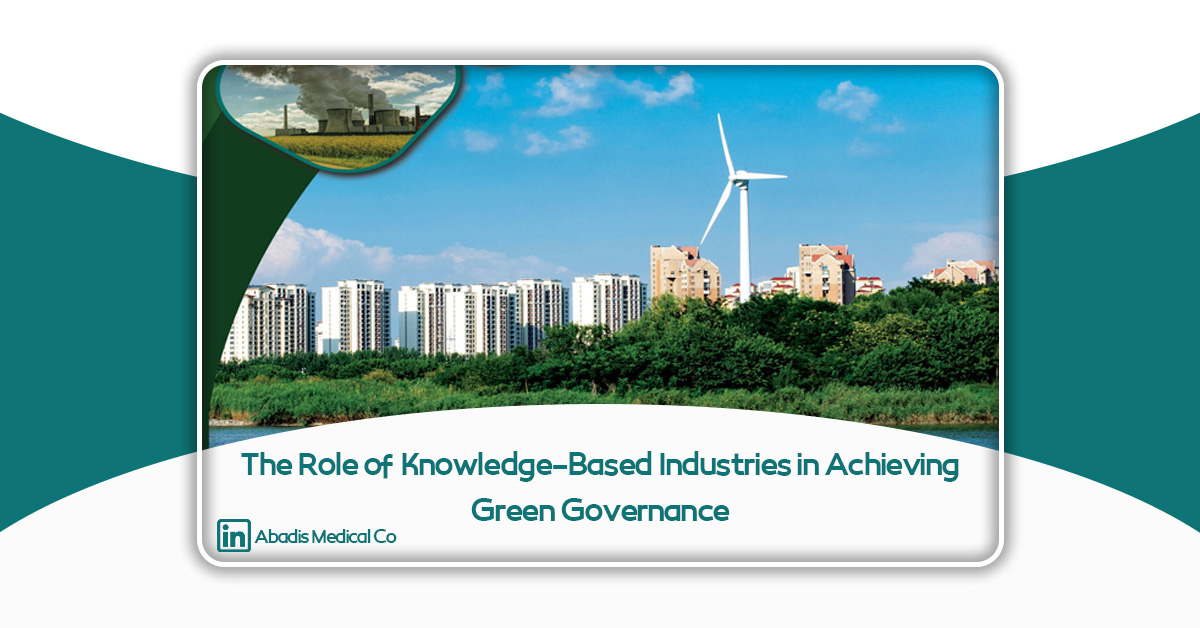
The Role of Knowledge-Based Industries in Achieving Green Governance:
A Case Study of Sustainable Innovation in the Production of Disposable Suction Liner Bags as a Solution to Reduce Water Consumption and Hospital Waste
Abstract
Purpose: With growing global concerns about pollution caused by hospital waste and the excessive consumption of water resources in sterilization processes, the need to move toward green governance in the healthcare industry has become increasingly evident. In this context, knowledge-based industries can play a vital role in reducing environmental impacts through technological innovation. This study examines the role of sustainable innovation in the production of disposable suction liner bags as an example of green industry technology in Iran.
Methods: The present study employs a descriptive–analytical approach based on empirical data collected from the performance of this product in more than 500 hospitals across the country. Key indicators such as water savings, reduction of infectious waste, energy efficiency, and improvement of workplace hygiene were analyzed through comparative evaluation between traditional reusable suction canisters and the new disposable suction liner system.
Results: Findings show that the use of disposable suction liner bags leads to a remarkable reduction in water consumption—approximately 10 million liters per year across the hospital network. This technology also significantly decreases the volume of infectious waste, reduces cross-contamination risks, conserves energy, and lowers cleaning and labor costs. The results confirm that this innovation aligns closely with the United Nations Sustainable Development Goals (SDGs), particularly Goals 3 (Good Health and Well-Being), 6 (Clean Water and Sanitation), 8 (Decent Work and Economic Growth), 9 (Industry, Innovation and Infrastructure), and 12 (Responsible Consumption and Production).
Conclusion: The experience of Abadis Medical Co., as a knowledge-based enterprise, demonstrates that the development and branding of environmentally friendly medical products can serve as a successful example of an Iranian green industry model contributing to the realization of green governance. Promoting such innovations not only mitigates environmental impacts in the healthcare sector but also enhances the global competitiveness of domestic knowledge-based industries.
Keywords: Green Governance, Sustainable Development, Green Industry, Disposable Suction Liner Bag, Biomedical Waste, Knowledge-Based Industries
-
Introduction
In recent decades, population growth and the increasing number of healthcare services have significantly increased the volume of hospital waste, which, if improperly managed, may lead to the of biological and chemical contamination [1]. In particular, effluents generated from the cleaning of suction equipment and fluid collection containers are considered one of the major sources of secondary pollution in healthcare facilities [2]. According to the World Health Organization (WHO), approximately 15% of total hospital waste is classified as infectious or hazardous, and in many countries, due to inadequate treatment and sterilization infrastructure, these wastes are directly discharged into the environment [3].
On the other hand, conventional suction canister cleaning systems in hospitals not only consume large amounts of water, but also increase the risk of healthcare workers’ exposure to contaminated fluids and pathogenic agents. According to the studies of Gordon and Schiller (2023), the use of disposable systems for hospital fluid collection can reduce effluent contamination by up to 70% while significantly decreasing water and energy consumption [4].
In response to these challenges, the transition toward Green Governance in the healthcare sector and the adoption of knowledge-based innovations have gained increasing importance. Green governance is based on multi-sectoral decision-making, transparency, and synergy among industry, government, and society [5]. Within this framework, knowledge-based industries can contribute to reducing environmental pressures and achieving sustainable development goals through the production of environmentally friendly technological products [6].
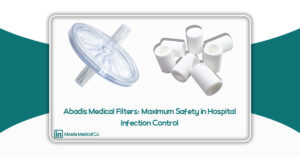
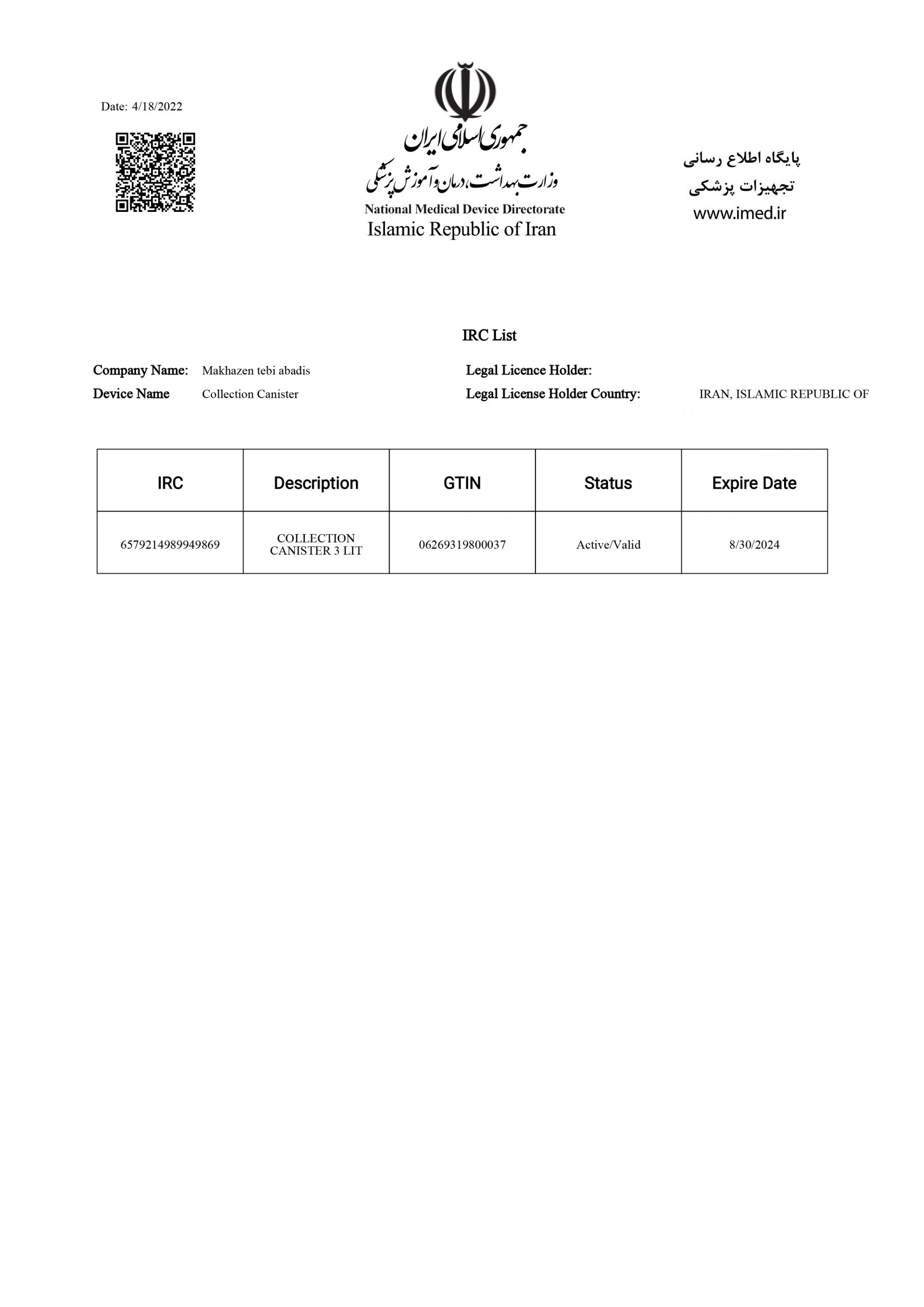
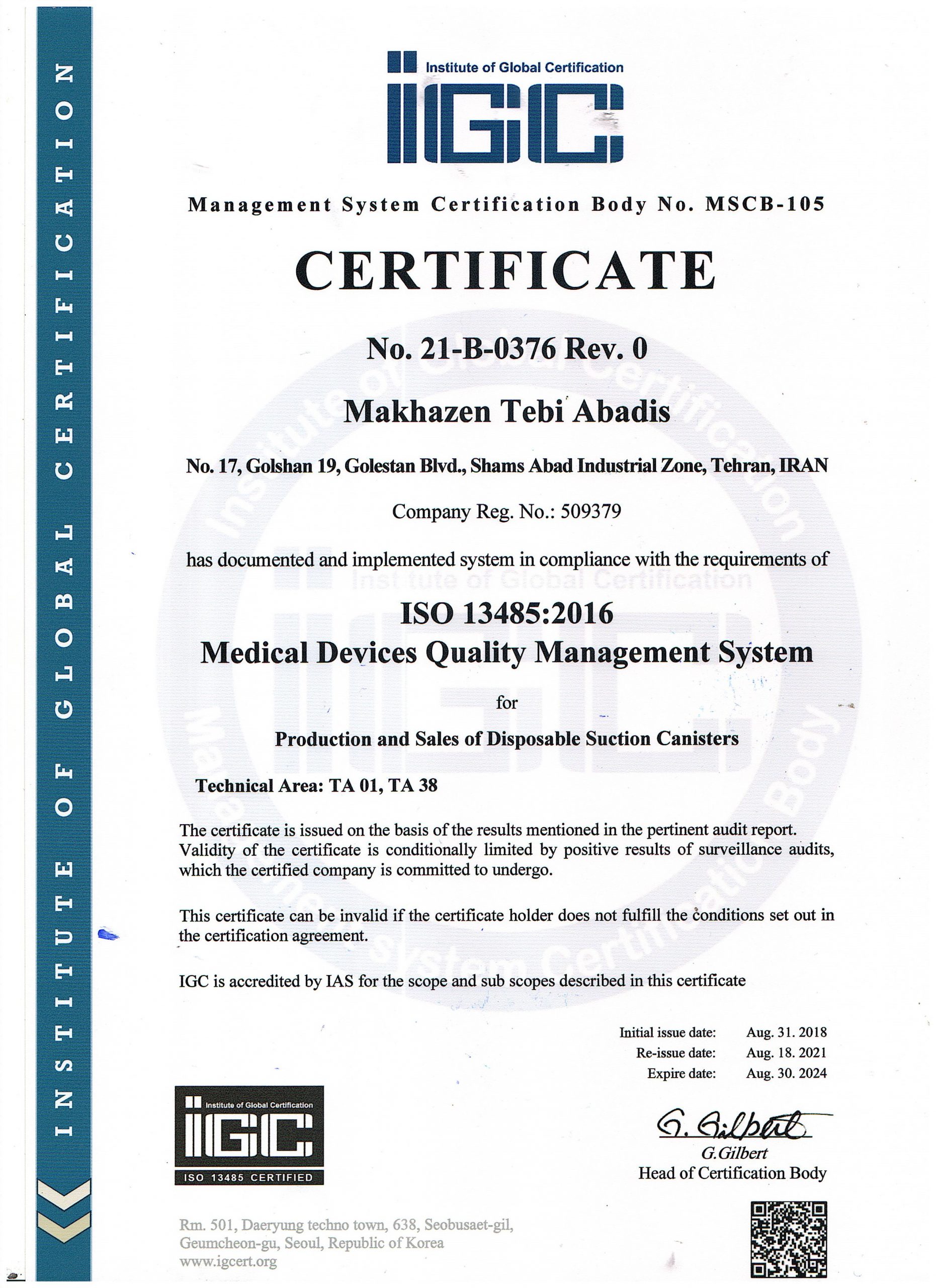
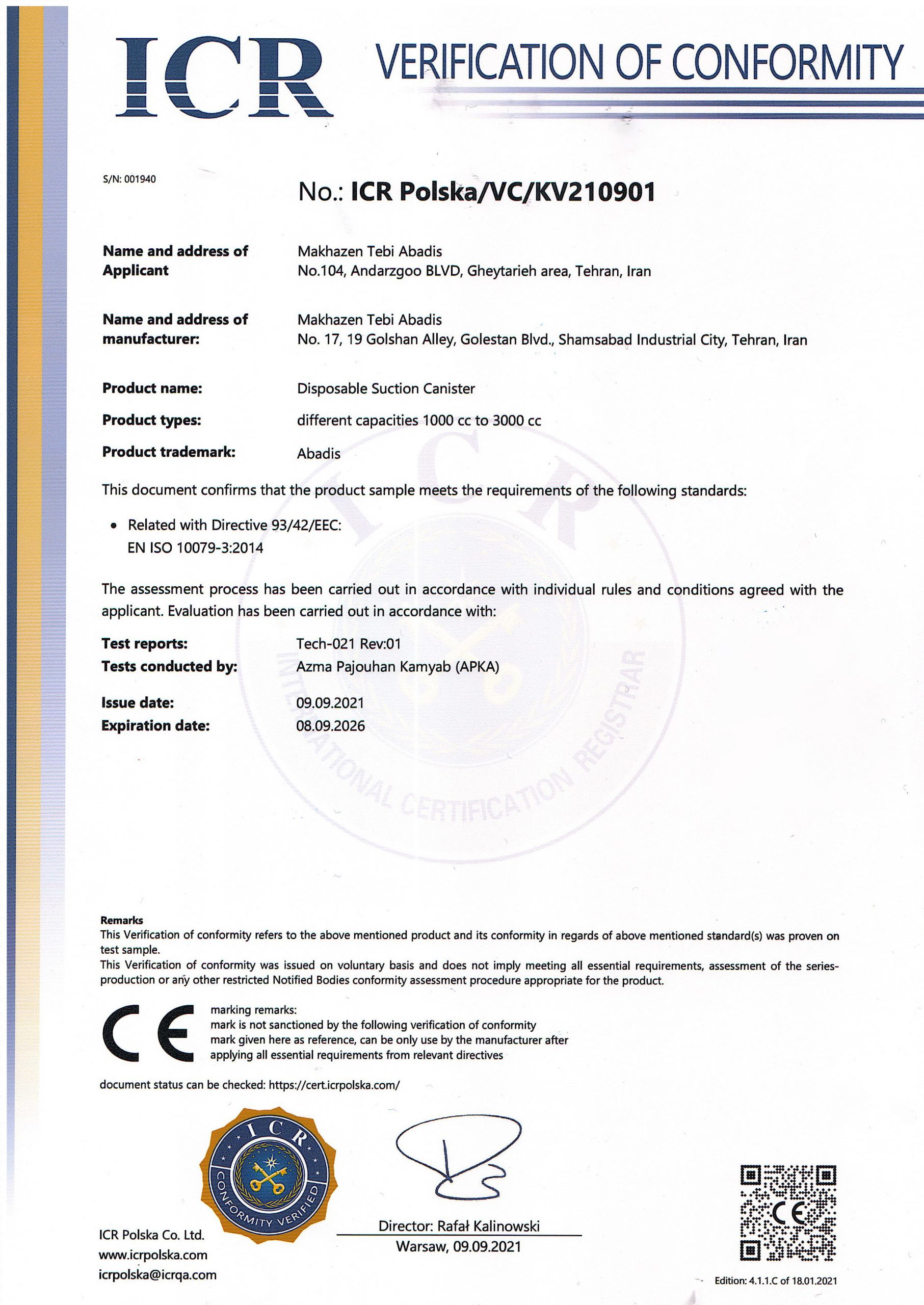
One of the successful domestic examples in this field is Abadis Medical Co., a knowledge-based enterprise that has developed and manufactured disposable suction liner bags, creating a localized model of green industry in Iran. By eliminating the washing and sterilization process of conventional suction canisters, this innovation has resulted in an annual saving of approximately 10 million liters of water in hospitals across the country, while also reducing energy consumption, chemical usage, and the volume of infectious waste [7].
According to the company’s official reports, the environmental impacts of this product are fully aligned with the United Nations Sustainable Development Goals (UN SDGs), particularly Goals 3 (Good Health and Well-Being), 6 (Clean Water and Sanitation), 9 (Industry, Innovation and Infrastructure), and 12 (Responsible Consumption and Production) [8]. Therefore, examining this experience can provide a better understanding of the role of knowledge-based industries in achieving green governance within the healthcare sector.
-
Methodology
This study was conducted using a descriptive–analytical method with a case study approach. The main objective was to evaluate the environmental impacts of using disposable suction liner bags compared to conventional reusable suction canister cleaning systems in hospitals.
2.1. Population and Data Collection
The research data were collected from two main sources:
- Empirical Data from Abadis Medical Co.
Operational data were gathered from more than 38 hospitals in Tehran, Mashhad, Shiraz, Isfahan, and Tabriz between 2020 and 2024. The monitored indicators included water consumption, electrical energy consumption, disinfectant usage, infectious waste volume, and reported cases of healthcare workers’ exposure to contaminated fluids. - Comparative Data from International Studies
Comparative findings were extracted from the studies of Sharafi (2023) and Gordon & Schiller (2023), which investigated the environmental impacts of disposable suction systems in healthcare centers across different countries and reported improvements in indicators such as water consumption, energy efficiency, and reduction of infectious effluents [1], [4].
The integration of these two data sources enabled a comparative evaluation between domestic and international findings.
2.2. Analytical Tools and Assessment Model
To assess environmental impacts, the study applied the Life Cycle Assessment (LCA) model based on the international standard ISO 14040 [9].
Within this framework, the entire lifecycle of the system—from fluid collection to final waste disposal—was analyzed, and its effects on environmental indicators including water consumption, energy usage, pollution generation, and waste production were measured.
After collection, the data were normalized and converted into relative values. The analyses were conducted using Excel 2021 and SPSS v.26 software. Finally, the average reduction of each indicator compared to the conventional system was calculated and presented numerically and graphically.
2.3. Evaluation Indicators
The study evaluated four major indicators:
- Water Consumption (Liters per year)
- Electrical Energy Consumption (kWh per year)
- Infectious Waste Volume (Kilograms per year)
- Healthcare Workers’ Exposure to Contaminated Fluids (Cases per year)
| No. | Indicator | Unit of Measurement | Evaluation Objective |
| 1 | Water Consumption | Liters per year | Assessment of water resource savings |
| 2 | Electrical Energy Consumption | kWh per year | Evaluation of energy reduction resulting from eliminating the washing process |
| 3 | Infectious Waste Volume | Kilograms per year | Assessment of hazardous waste reduction |
| 4 | Healthcare Workers’ Exposure to Contaminated Fluids | Cases per year | Evaluation of occupational safety and reduction of contamination risks |
2.4. Comparison and Validation
To validate the findings, the domestic data were compared with the results of international studies, particularly Sharafi (2023) and Gordon & Schiller (2023), in order to confirm similar trends and reduction rates.
For example, the levels of water and energy savings observed in the Iranian data (90% and 65%, respectively) were fully consistent with the ranges reported in international studies (70%–85%) [1], [4], [11].
Furthermore, in order to align the results with the United Nations Sustainable Development Goals (SDGs), indicators related to SDG 3, SDG 6, SDG 9, and SDG 12 were also evaluated [10], [13].
-
Results
The findings obtained from the analysis of empirical data collected by Abadis Medical Co. from 38 hospitals across the country, together with comparative analysis of the studies conducted by Sharafi (2023) and Gordon & Schiller (2023), demonstrated that the use of the disposable suction liner system has significant effects on reducing resource consumption and improving environmental performance compared to conventional reusable suction canister cleaning systems.
Based on the collected data, this technology resulted in substantial reductions in water consumption, energy usage, chemical disinfectant consumption, and infectious waste generation, while simultaneously improving healthcare workers’ safety. Quantitative details are presented in Table 2.
3.1. Quantitative Results
Table 2 presents a comparison of the major environmental indicators between the two systems. The data were calculated as annual averages for each hospital and then aggregated to obtain the overall mean values.
| Indicator | Conventional System | Disposable Suction System | Improvement Rate | Description |
| Water Consumption (Liters/year) | 10,000,000 | 800,000 | –92% | Elimination of the washing process |
| Electrical Energy Consumption (kWh/year) | 45,000 | 15,000 | –67% | Removal of washing and drying equipment |
| Infectious Waste Volume (kg/year) | 100 | 25 | –75% | Closed-cycle system reducing contaminated leakage |
| Healthcare Workers’ Exposure to Contaminated Fluids (Cases/year) | 30 | 3 | –90% | Reduction of direct contact with infectious fluids |
| Disinfectant Consumption (Liters/year) | 1,200 | 250 | –79% | Reduced use of chemical disinfectants and detergents |
3.2. Results Analysis
As shown in Table 2, the greatest improvement was related to the reduction in water consumption (92%).
This saving is estimated to be equivalent to approximately 10 million liters of water per year across the national hospital network [7].
This finding is consistent with the reports of Sharafi (2023) and Gordon & Schiller (2023), which also reported water-saving rates ranging from 85% to 95% [1], [4].
Furthermore, the elimination of washing and sterilization equipment resulted in a 67% reduction in energy consumption and a 79% decrease in disinfectant chemical usage. In addition to lowering operational costs, these reductions have a direct impact on decreasing carbon emissions and secondary environmental pollution [10], [11].
The analysis of occupational safety data also revealed that direct healthcare workers’ exposure to contaminated effluents decreased from an average of 30 cases per year in the conventional system to only 3 cases per year in the disposable system, representing a 90% reduction in occupational contamination risk [2], [13].
Overall, based on the LCA model, the environmental sustainability index of the disposable suction system increased from 40% to 87%, indicating strong alignment of this technology with the principles of green governance and the Sustainable Development Goals (SDGs).
-
Discussion and Conclusion
The findings obtained from the analysis of empirical data collected by Abadis Medical Co. from 38 hospitals across the country, together with comparative data from the studies of Sharafi (2023) and Gordon & Schiller (2023), demonstrated that the use of the disposable suction liner system, compared with conventional reusable suction canister cleaning systems, has significant effects on reducing resource consumption and improving environmental performance.
Based on the collected data, this technology resulted in considerable water savings, reductions in energy and chemical consumption, lower volumes of infectious waste, and improved healthcare workers’ safety. Quantitative results are presented in Table 1.
The results of this study indicate that innovation in knowledge-based medical equipment industries can play a key role in achieving green governance and reducing environmental impacts. The analysis of data from 38 hospitals and comparison with international studies revealed that the implementation of disposable suction systems not only significantly decreases water, energy, and disinfectant consumption, but also improves occupational health indicators and reduces infectious waste generation [1], [4], [7].
These findings are consistent with the studies conducted by Sharafi (2023) and Gordon & Schiller (2023), which also reported that replacing conventional cleaning systems with disposable technologies reduces effluent contamination by more than 70% and lowers energy consumption by up to 60% [1], [4]. In addition, reports from the World Health Organization (WHO, 2022) and the United Nations Environment Programme (UNEP, 2022) emphasize that closed disposable suction systems are among the most effective methods for controlling pathogen انتشار in hospitals and preventing contamination of water resources [2], [13].
From the perspective of Green Governance, the findings of this research demonstrate that the development of environmentally friendly technologies in the medical industry is not merely a technical innovation, but also an institutional and policy-oriented step, as it creates synergy among the three major pillars of green governance: government, industry, and society [5].
The implementation of such technologies helps governments achieve sustainable development goals at lower costs, enables industries to improve efficiency and reduce operational expenses, and assures society that healthcare services can be provided without damaging the environment.
The present study also demonstrated that disposable suction technology is directly aligned with several key United Nations Sustainable Development Goals (SDGs):
- SDG 3 – Good Health and Well-Being: Improving hospital hygiene and reducing contamination transmission
- SDG 6 – Clean Water and Sanitation: Saving more than 10 million liters of water annually
- SDG 8 – Decent Work and Economic Growth: Creating sustainable employment opportunities in domestic knowledge-based industries
- SDG 9 – Industry, Innovation and Infrastructure: Developing high-value indigenous technology
- SDG 12 – Responsible Consumption and Production: Reducing hazardous waste and eliminating polluting chemicals [10], [13]
From an economic perspective, the reduction of cleaning, energy, sterilization, and waste disposal costs generates considerable financial benefits for hospitals, making this technology not only environmentally sustainable but also economically feasible.
At the policy-making level, supporting knowledge-based companies active in green technologies—through simplified licensing procedures, environmental subsidies, and tax incentives—can play an important role in expanding such innovations.
The Abadis model demonstrates that an Iranian company can simultaneously pursue economic growth, public health improvement, and environmental protection; this integrated approach represents the core principle of green governance.
Recommendations
- Conducting broader Life Cycle Assessment (LCA) studies in additional hospitals and comparing the results with international brands to enhance the statistical validity of the findings.
- Developing economic models to calculate the financial savings resulting from reductions in water, energy, and chemical consumption.
- Designing educational and training programs for hospital infection control units in order to optimize the implementation and use of disposable suction systems.
- Establishing a national database for green medical equipment to facilitate strategic decision-making within the Ministry of Health and environmental organizations.
Final Conclusion
The experience of Abadis Medical Co. demonstrated that the integration of technological innovation, environmental commitment, and sustainable management systems can effectively contribute to achieving the objectives of green governance.
The nationwide implementation of this technology not only helps reduce hospital pollution and conserve valuable resources, but also presents a successful model of an Iranian green industry with the potential for technological export and national brand development.
Acknowledgments
The author would like to express sincere appreciation to the technical experts of Abadis Medical Co. and the infection control managers of the selected hospitals who provided the empirical data used in this research. The author also acknowledges the scientific support of the journal Biomedical and Allied Research and the contributions of researchers and authors working in the field of hospital waste management and environmental sustainability.
Refrence
1- Gordon, A., & Schiller, S. (2023). Improving the environmental effects of nosocomial infectious effluents by using disposable suction liner bags. Journal of Biomedical and Allied Research, 5(2), 36–45.
2- World Health Organization. (2020). Safe management of wastes from health-care activities (2nd ed.). Geneva: WHO Press.
3- World Health Organization. (2022). Global report on health-care waste and its management. Geneva: WHO Press.
4-Sharafi, N. (2023). Environmental assessment of disposable suction systems in hospitals. Biomedical & Allied Research, 5(3), 45–53.
5-UNDP. (2021). Green governance and sustainable health systems. New York: United Nations Development Programme.
6-United Nations. (2015). Transforming our world: The 2030 Agenda for Sustainable Development. A/RES/70/1.
7-Abadis Medical Co. (2025). اهداف توسعه پایدار آبادیس و تأثیرات محیطزیستی محصولات دانشبنیان. Retrieved from https://abadis-med.com/اهداف-توسعه-پایدار-آبادیس/
8- OECD. (2023). Sustainable manufacturing and eco-innovation in health industries. OECD Policy Papers.
9-ISO 14040. (2006). Environmental management — Life cycle assessment — Principles and framework. International Organization for Standardization.
10-UNDP. (2023). SDG Indicators and Environmental Health Index. United Nations Development Programme.
11-Partonia, P., Heidarian, S., Sharifi, M., Dezvareh, G., & Khodadadi Darban, A. (2024). Evaluation of environmental impacts of cleanroom construction with a life cycle analysis approach based on energy and material consumption. Scientific Reports, , 31929. https://doi.org/10.1038/s41598-024-83449-6
12-Song, Q., Guo, M.-Z., Wang, L., & Ling, T.-C. (2021). Use of steel slag as sustainable construction materials: A review of accelerated carbonation treatment. Resources, Conservation and Recycling, 173, 105740.
13-UNEP. (2022). Sustainable procurement in healthcare: Guidelines for green hospitals. Nairobi: United Nations Environment Programme.
14 Ministry of Health, Iran. (2023). راهنمای مدیریت سبز بیمارستانها و کاهش مصرف آب در مراکز درمانی. تهران: معاونت بهداشت محیط.
15 . مهتابی اوغانی، م.، نجفی، ا.، و یونسی، ح. (۱۳۸۹). نقش عوامل هیدرولوژیک و زمینشناسی در انتخاب جایگاه دفن زباله. همایش عوامل اجتماعی مؤثر بر سلامت، دانشگاه علوم پزشکی ایران