







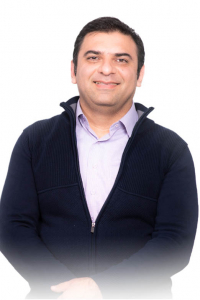
















The “To Tharya” program on Radio Salamat focused on domestic innovations in the field of medical equipment and hosted Alireza Hassanali, CEO of the knowledge-based company Abadis Medical Containers.
The discussion, moderated by Dr. Kiana Farahi and Mr. Hassani, with the participation of healthcare professionals and users, centered on the introduction of disposable suction bags, their technology, and their contribution to resource efficiency.
At the beginning of the program, Dr. Farahi highlighted the importance of reducing water consumption and controlling contamination in healthcare centers, saying:
“One of the successful examples in this area is a product designed and manufactured domestically, which can replace traditional and risky methods of surgical waste disposal. These suction bags have reduced water consumption and improved the safety of hospital staff.”
Then, Mr. Hassani turned to Alireza Hassanali, asking him about the technology and operation of disposable suction bags.
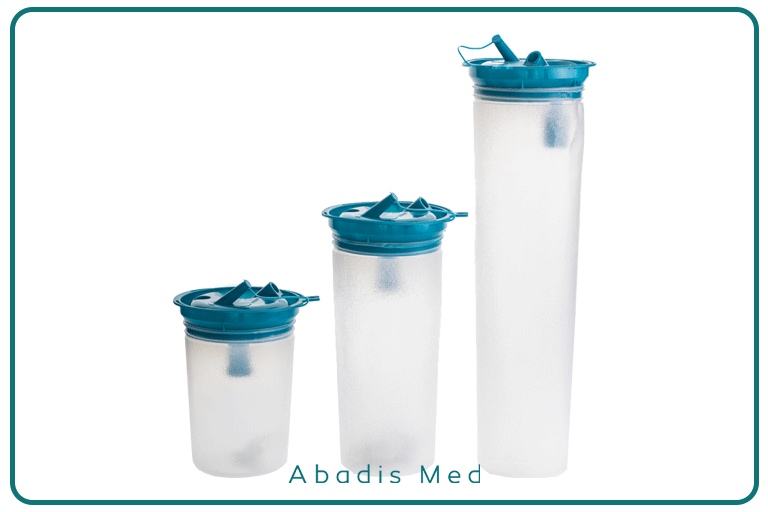
Hassanali explained:
“These bags are designed to collect surgical suction waste. Previously, fixed containers were used, which required washing — a costly and water-intensive process. By switching to disposable suction bags, we have reduced costs and saved about 40 million liters of water so far.”
He continued:
“In the past, infectious waste and blood residues went into fixed tanks that had to be disinfected using large amounts of water and chemicals. Now, with our new system, that process is eliminated — and healthcare staff no longer come into direct contact with contaminated fluids.”
Local Manufacturing and Global Standing
Regarding the technology, Hassanali noted:
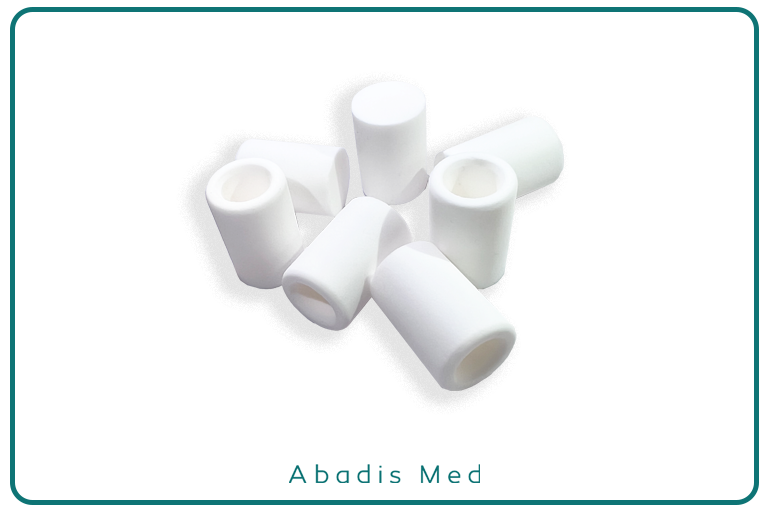
“The bags are made from porous polymers and specialized hydrophobic filters. Once the bag is full, the system automatically signals the device to stop suction. Since 2022, all filters have been produced domestically with higher quality. Before our innovation, only four countries — the United States, Japan, China, and Taiwan — produced such filters. Iran has now become the fifth.”
He added:
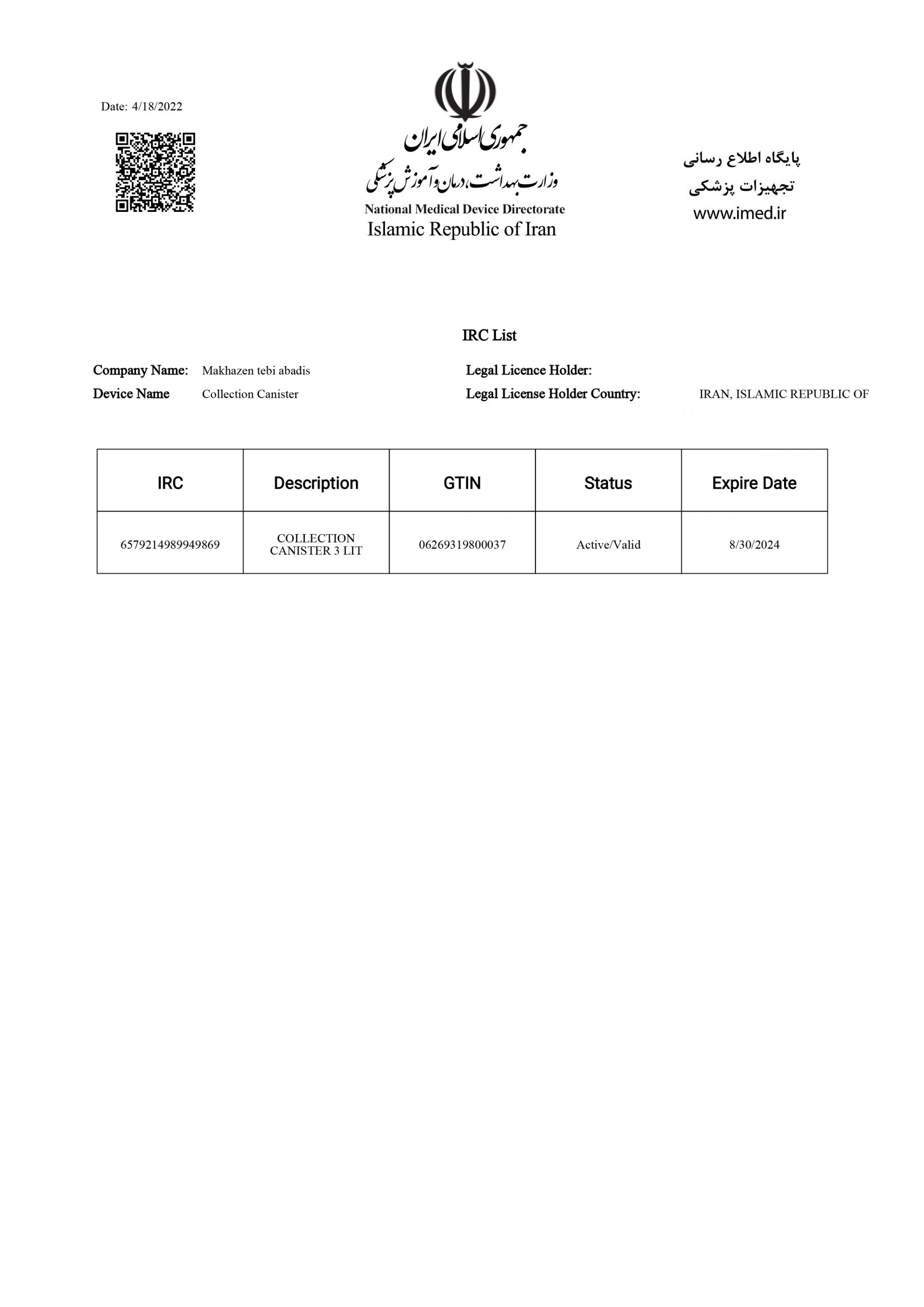
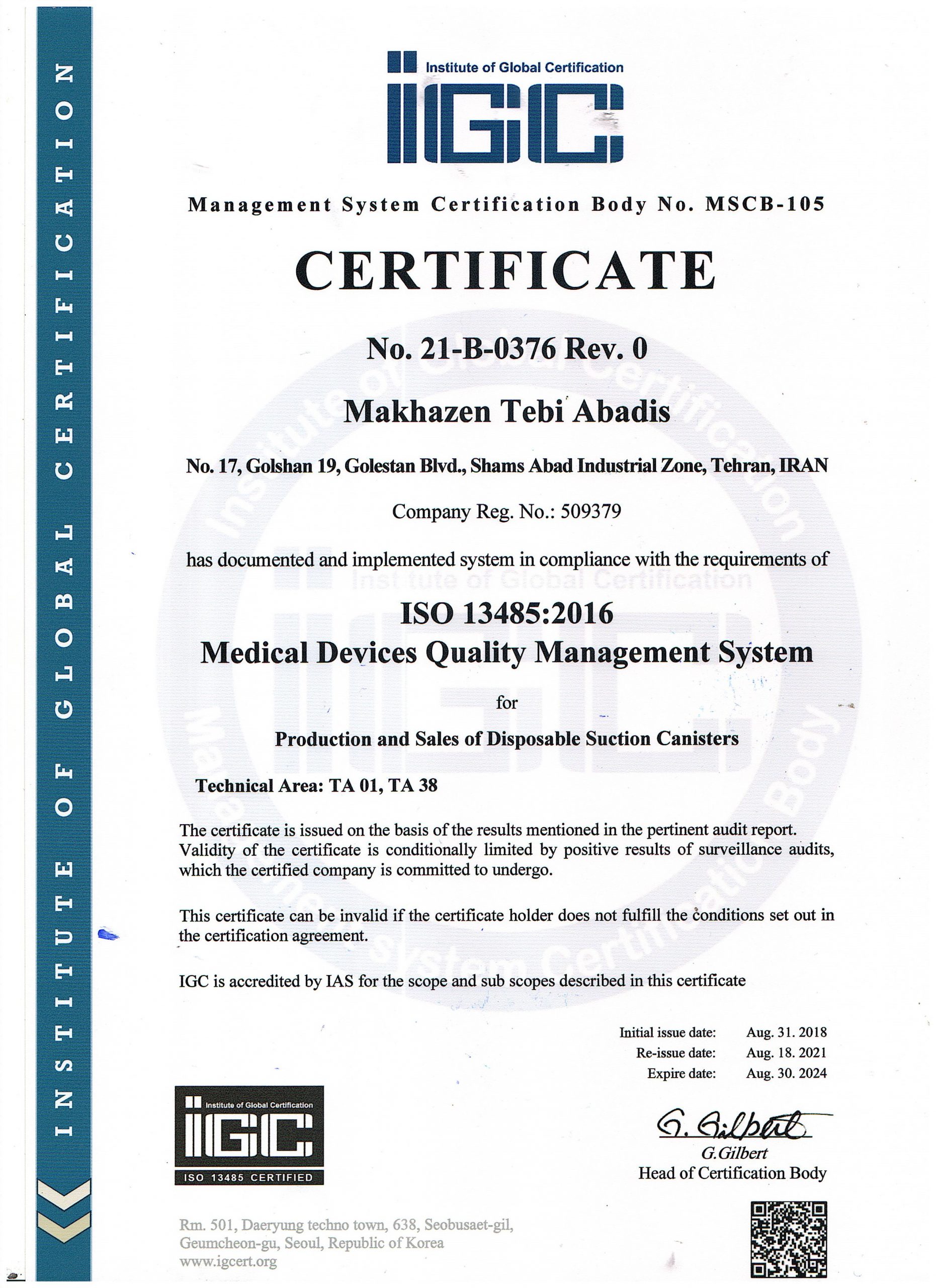
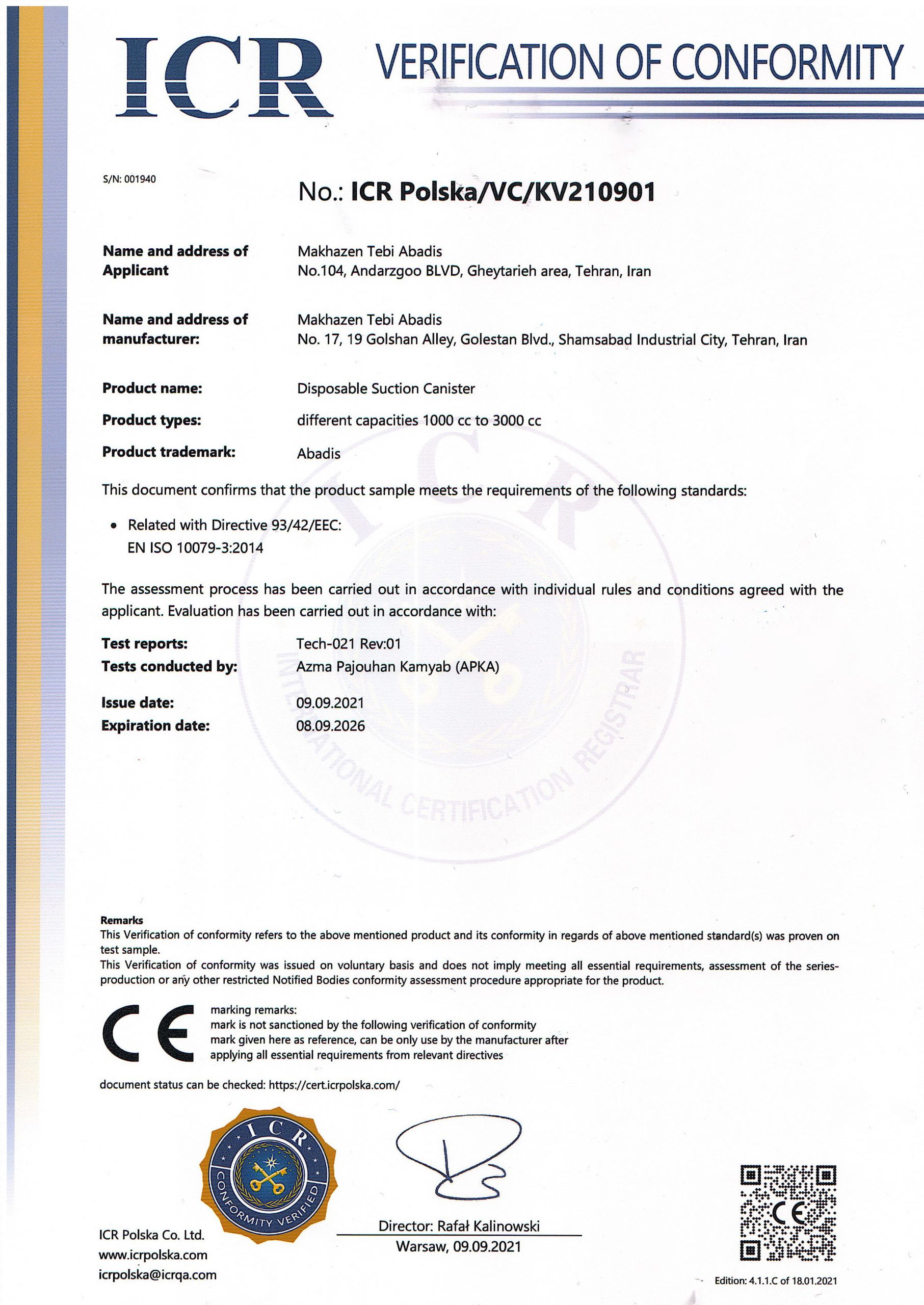
“We began our activities in 2017, and the product entered the market in 2018. Since 2021, these suction bags have been fully adopted in about 600 hospitals and medical centers across the country. Over the past three years, we’ve also started exporting to Oman and Iraq, where they are used in multiple cities.”
Young Workforce and Smart Management
About the company structure, Hassanali said:
“Our team includes more than 50 employees with an average age of 33. We are proud of our youth-oriented culture, data-driven decision-making, and use of business intelligence (BI) systems. These elements have given us faster growth and more informed decision-making compared to similar firms.”
Challenges and Resilience
He also spoke about the company’s challenges:
“We face significant economic pressure — the biggest issues being delayed payments from hospitals and frequent power outages. These affect morale and production costs. However, even during the recent war, we never stopped production or delivery for a single day, including weekends. We believe serving our hospitals and our country is a duty.”
Product Development
“We are expanding our product portfolio — developing suction filters in multiple sizes, suction tubes, and complementary products. Our goal is to provide world-class quality while strengthening domestic medical technology.”
Field Reports and User Experience
In the field segment, nurses and hospital staff shared their experiences:
“Before using these bags, cleaning the tanks was time-consuming and risky. Now the process is much easier and cleaner.”
“Saving water and eliminating the risk of contact with infectious fluids are huge advantages. We’re proud of domestic production and hope to see more progress.”Closing Remarks
At the end, Mr. Hassani, the host, concluded:
“Companies like Abadis show that by relying on local expertise, it’s possible to produce world-class medical products. It’s the media’s duty to amplify their voices.”
Dr. Farahi added:
“Developing knowledge-based products in healthcare is a vital step toward protecting public health and achieving industrial independence. We hope to see more such successful initiatives in the future.”