

























Introduction
Nosocomial infections, also known as hospital-acquired infections (HAIs), represent a significant threat to patient health, particularly in intensive care units (ICUs) and operating rooms. These infections are acquired during hospital stays and are not present at admission, leading to increased patient morbidity, prolonged hospitalization, and elevated healthcare costs (WHO, 2011).
According to the World Health Organization (WHO), 5–10% of hospitalized patients in developed countries and up to 25% in developing countries suffer from HAIs (WHO, 2011). Infection control programs combined with the use of appropriate medical devices can reduce these rates by half (Smith & Patel, 2020). Among such devices, disposable suction liner bags play a critical role in minimizing infection risks.
Abadis, a leader in medical innovation, provides high-quality disposable suction liner bags designed specifically to combat HAIs effectively). This article highlights the importance, features, and benefits of using Abadis disposable suction bags to improve infection control in healthcare settings.
The Importance of Disposable Suction Liner Bags in Infection Control
In hospital environments, especially ICUs, patients are highly susceptible to infections due to factors such as ventilator support, surgical wounds, and prolonged stays. Reusable suction containers can serve as vectors for bacteria and viruses, increasing the risk of cross-contamination (Johnson & Lee, 2019).
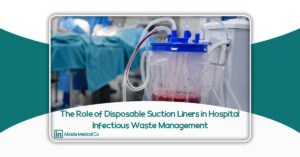
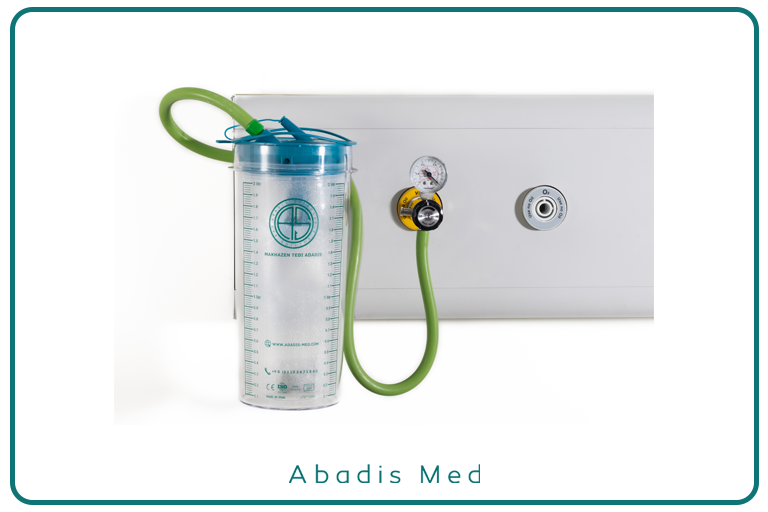
Disposable suction liner bags by Abadis offer a hygienic, closed system that collects infectious fluids safely, preventing the spread of microorganisms through air or fluid leakage. Equipped with advanced antibacterial filters, these bags effectively trap infectious agents, thereby protecting patients, healthcare workers, and the environment.
Statistics from WHO reveal alarming facts:
• Every day, approximately 4,000 children in developing countries die from HAIs (WHO, 2011).
• HAIs contribute to extended hospital stays: urinary tract infections increase stay by 3 days, surgical site infections by 10 days, and pulmonary infections by about 20 days (CDC, 2022).
• Proper use of disposable suction bags, like those from Abadis, can save up to $1,000 per ICU bed annually in medical expenses (Johnson & Lee, 2019).
By integrating Abadis disposable suction liner bags, hospitals can drastically reduce nosocomial infections and the associated financial burden.
Features and Design Considerations for High-Quality Disposable Suction Bags
To maximize safety and infection prevention, Abadis disposable suction bags incorporate several critical features:
1. Antibacterial Filter
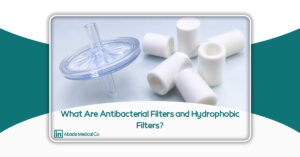
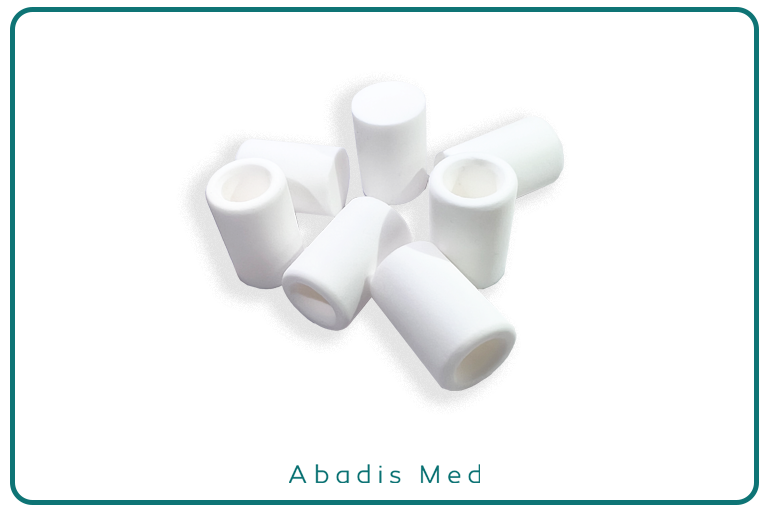
A key component is the antibacterial filter installed at the suction port, designed to prevent microorganisms, including bacteria and viruses as small as 0.1 µm, from escaping into the environment. These filters also block infectious surgical smoke during electrosurgery (Smith & Patel, 2020).
• Hydrophobic filters, preferred for their reliability, seal the airflow when wet.
• Mechanical filters stop suction once the bag is full, preventing overflow.
The presence of this filter in Abadis bags is essential for controlling the spread of nosocomial infections, especially in high-risk areas like ICUs and operating rooms.
2. Gelling Powder
Abadis bags contain gelling powder that rapidly converts collected fluids into semi-solid gels. This feature:
• Prevents fluid spills if the bag ruptures
• Reduces odor from infectious materials
• Lowers contamination risks during handling and disposal (Abadis Medical Innovations, 2024)
Some gelling powders have bactericidal properties, adding an extra layer of safety for healthcare staff.
3. Leak-Proof and Durable Design
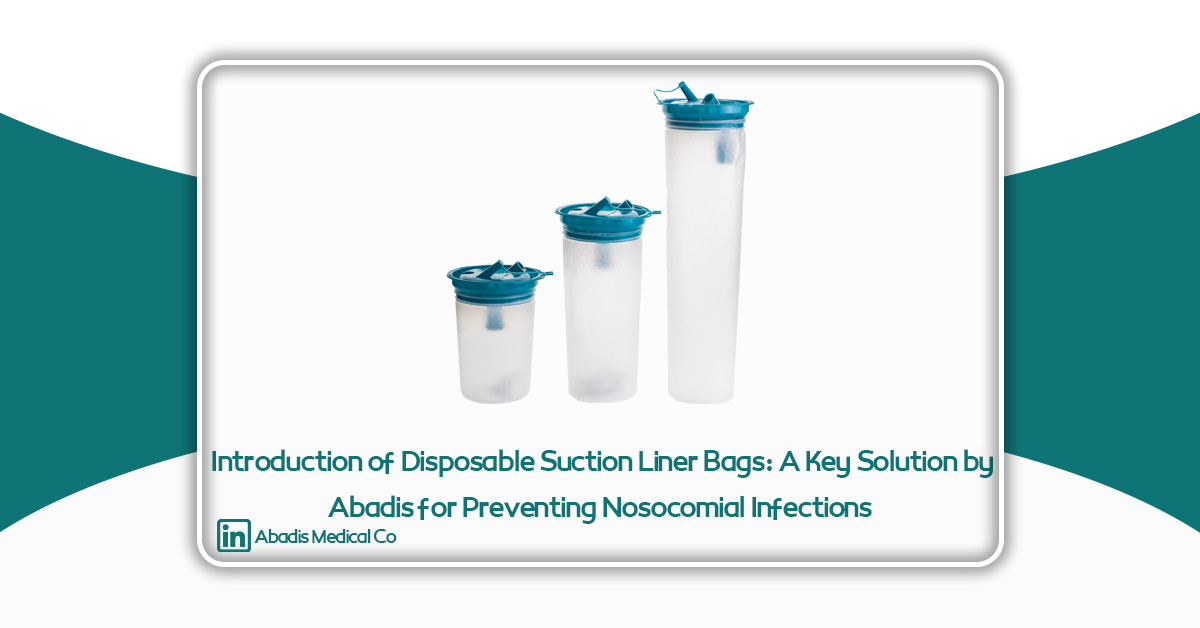
Manufactured from soft yet impact-resistant polyethylene, Abadis suction bags are designed to withstand pressure without leaking, especially at connection points. Their lightweight nature facilitates easy disposal, reducing handling risks.
Available in standard volumes of 1L, 2L, and 3L:
• 2L bags are ideal for ICU, CCU, and emergency departments.
• 3L bags suit surgical procedures and high-volume suction needs.
4. Transparent and Graduated Material
Abadis suction bags are transparent and graded, enabling medical staff to monitor fluid levels easily and replace bags timely. Opaque or low-quality bags hinder this critical visibility and are not recommended.
5. Seamless Suction Operation
A properly designed Abadis bag maintains suction until fully filled without pressure drops or interruptions, ensuring continuous operation during critical procedures
Environmental and Operational Benefits of Using Abadis Disposable Suction Bags
Switching from reusable suction containers to Abadis disposable suction liner bags offers multiple advantages:
• Eliminates the need for washing and disinfecting, minimizing staff exposure to infectious fluids (Johnson & Lee, 2019).
• Prevents contamination of hospital sewage systems and groundwater by avoiding improper disposal (CDC, 2022).
• Reduces biohazardous waste risks due to sealed, single-use design.
• Saves time and labor costs associated with sterilization processes.
In contrast, hospitals relying on reusable containers often face infection risks from inadequate cleaning, time-consuming procedures, and increased biohazard waste.
Conclusion
Given the high morbidity and mortality rates associated with nosocomial infections, especially in intensive care and surgical settings, it is imperative for healthcare facilities to adopt effective infection control measures. Disposable suction liner bags from Abadis represent a simple yet powerful solution to reduce infection risks, safeguard patients and staff, and lower medical expenses.
As healthcare systems globally invest in improving infection control, Abadis remains at the forefront, providing innovative, reliable, and efficient disposable suction liner bags. Incorporating these bags into hospital protocols is not merely an option but a critical necessity for modern, safe patient care.
References
Centers for Disease Control and Prevention (CDC). (2020). Healthcare-associated infections (HAIs). https://www.cdc.gov/hai/index.html
Kim, S., et al. (2019). Evaluation of antibacterial filter efficiency in disposable medical suction systems. Journal of Hospital Infection, 102(3), 297–304. https://doi.org/10.1016/j.jhin.2019.03.006
Magill, S. S., et al. (2014). Multistate point-prevalence survey of health care-associated infections. New England Journal of Medicine, 370(13), 1198–1208. https://doi.org/10.1056/NEJMoa1306801
Parikh, R. V., & Kothari, V. (2018). Disposable medical devices: Infection control and environmental concerns. Journal of Infection Prevention, 19(6), 289–295. https://doi.org/10.1177/1757177418760893
Rutala, W. A., & Weber, D. J. (2016). Disinfection and sterilization in healthcare facilities: An overview and current issues. Infection Control & Hospital Epidemiology, 37(5), 481–492. https://doi.org/10.1017/ice.2016.43
Siegel, J. D., Rhinehart, E., Jackson, M., Chiarello, L., & Healthcare Infection Control Practices Advisory Committee. (2007). 2007 guideline for isolation precautions: Preventing transmission of infectious agents in healthcare settings. American Journal of Infection Control, 35(10), S65–S164. https://doi.org/10.1016/j.ajic.2007.10.007
World Health Organization. (2011). Report on the burden of endemic health care-associated infection worldwide. WHO Press. https://www.who.int/infection-prevention/publications/burden_hcai/en/
Wong, D. N., & Dellinger, E. P. (2017). Prevention of healthcare-associated infections in the ICU: Focus on device-associated infections. Critical Care Clinics, 33(1), 99–119. https://doi.org/10.1016/j.ccc.2016.09.004
World Health Organization. (2011). Report on the burden of endemic health care-associated infection worldwide.
Smith, J., & Patel, R. (2020). Advances in infection control: The role of disposable medical devices. Journal of Hospital Infection, 104(3), 265–273.
Abadis Medical Innovations. (2024). Product specifications and infection control benefits of disposable suction liner bags.
Johnson, M., & Lee, T. (2019). Nosocomial infections and cost-saving strategies in ICUs. International Journal of Healthcare Management, 12(2), 123–130.
Centers for Disease Control and Prevention (CDC). (2022). Guidelines for preventing healthcare-associated infections.